Gateshead is one of Great Britain's higher-volume, lower-pass-rate centres, with a 37.5% pass rate from 9,512 car practical tests in 2025–26, 12.5 percentage points below the national figure. That doesn't make passing impossible, but it does make centre-specific preparation a poor thing to leave until the final lesson.
The Gateshead driving test centre sits in Dunston, close to a demanding mix of roundabouts, dual carriageways, slip roads and residential streets. Candidates who learn one supposed route often struggle when the examiner changes the sequence. Candidates who practise lane discipline, observation, speed control and independent decisions tend to be better prepared for whatever appears.
Table of Contents
- What Gateshead Test Centre Is Really Like
- Getting to Waterside Drive in Dunston
- Why a 7.1-Week Wait Can Still Be Hard to Book
- Reading the Local Roads Around Gateshead
- How 2026 DVSA Rule Changes Affect Rebooking
- Practising Transferable Skills Instead of Memorising Routes
- Practical Tips That Improve a Gateshead Pass Attempt
- Gateshead Test Centre Questions Worth Answering
What Gateshead Test Centre Is Really Like
The latest published figure puts Gateshead at 37.5%, based on 3,568 passes from 9,512 car practical tests between April 2025 and March 2026, compared with 50.0% across Great Britain for the same period. The figures are published in the Gateshead DVSA pass-rate series.
That makes Gateshead a high-volume centre where the road environment deserves respect. It doesn't mean examiners apply a different standard. The practical test is the same national test, but the combination of busy junctions, faster roads and urban driving gives you more opportunities to make a serious mistake.
The long-term pattern is useful because it shows that the recent result isn't an isolated fluctuation.
| Year | Gateshead pass rate | Great Britain pass rate |
|---|---|---|
| 2008–09 | 42.7% | 45.3% |
| 2015–16 | 46.6% | 47.1% |
| 2017–18 | 41.8% | Not stated |
| 2018–19 | 44.7% | Not stated |
| 2019–20 | 43.5% | Not stated |
| 2020–21 | 44.2% | Not stated |
| 2021–22 | 44.1% | Not stated |
| 2022–23 | 41.6% | Not stated |
| 2023–24 | 40.9% | Not stated |
| 2025–26 | 37.5% | 50.0% |
The historical data shows Gateshead sitting below Great Britain across much of the available series, including 42.7% against 45.3% in 2008–09 and 46.6% against 47.1% in 2015–16. The later figures fell to 40.9% in 2023–24, before the latest result.
The practical details
The centre is at Waterside Drive, Dunston, Gateshead, NE11 9HU, in Tyne and Wear. The published telephone number is 0300 200 1122, which is the DVSA's general driving-test contact number rather than a local centre reception.
Instructor's rule: Don't book Gateshead because it's familiar on a map. Book it when you and your instructor have tested your ability on its road types.
Before committing to a date, check three things. First, can your instructor provide a proper warm-up and use the car you've practised in? Second, can you handle the local roundabouts without prompts? Third, can you join faster roads and return to residential streets without losing your speed, mirrors or lane position?
Those checks matter more than finding a supposedly quiet route. The centre's lower historical success rate means preparation needs to be deliberate, not based on hope or route folklore.
Getting to Waterside Drive in Dunston
Treat the journey to Waterside Drive as part of your test preparation. The centre is at Waterside Drive, Dunston, Gateshead, NE11 9HU, and the surrounding area quickly brings you close to busy roads and junctions. Arriving late, circling for somewhere to stop or rushing from an unfamiliar bus route can leave you tense before the examiner has even introduced themselves.
If you're being driven there, getting dropped off is sensible. It avoids unnecessary pressure and gives you time to settle. A taxi can work well if you're travelling alone, but check the exact centre name and postcode before leaving. Don't assume a driver who knows Gateshead will automatically recognise the practical test entrance.
Public transport may involve travelling via Gateshead or Dunston, followed by a walk or short onward journey. Check the complete route on the morning of the test, including any walking section. A service delay is manageable when you've allowed time. It becomes a problem when you're relying on the final connection.
Arrive early, but don't sit stewing
Aim to reach the area ten to fifteen minutes early. That gives you room to deal with an awkward drop-off, find the entrance and take a few calm breaths. Arriving excessively early can also work against you if you spend a long time watching other candidates and imagining every possible fault.
Parking near a test centre can be limited, particularly when several candidates and instructors arrive close together. Ask your instructor where they normally wait and whether you should be dropped off rather than expect to park immediately outside.
The phone number can be useful for DVSA contact, but don't expect a centre-specific receptionist to talk you through local parking or route questions. Your booking confirmation and the official DVSA service are the proper sources for appointment details.
Before leaving home: Take your provisional licence, confirm the test time, check the vehicle is suitable and let your instructor know exactly where you'll meet.
Use the drive to the centre as a settling exercise if your instructor is with you. Don't spend it rehearsing every possible examiner instruction. Drive normally, identify the first few junctions and focus on observation, speed and positioning.
Why a 7.1-Week Wait Can Still Be Hard to Book
Gateshead's 7.1-week median wait in August 2026 looks attractive beside the 11.9-week national median, but the median doesn't tell you whether a suitable appointment is available when you need it. At the same time, only 11.3% of standard appointments in the booking window were available, compared with 6.4% the previous month, according to the Gateshead test-centre availability report.
A median is a midpoint, not a promise. It can tell you that Gateshead appointments may move faster overall than the national picture, but it can't guarantee a weekday slot, a time your instructor can attend or an appointment before your theory-test expiry date.
Usable availability is the real measure
For a learner with flexible work and an available instructor, the headline wait may be perfectly manageable. For someone working shifts, attending college, arranging a school run or sharing a family car, the effective wait can be longer.
That's why you should compare the date with your actual diary rather than selecting the first appointment displayed. A date you can't attend isn't useful availability. Neither is a slot your instructor can't cover.
Use the DVSA waiting-time guidance and booking advice as a prompt to distinguish the published delay from the appointments you can actually use. Check nearby centres with your instructor, but don't switch just because a different name appears to have space.
From 9 June 2026, a learner can move a booked test only to one of the three nearest centres. That narrows the value of broad searches and makes the local group of centres more relevant. The right comparison is not “Which centre in Britain has a slot?” It's “Which permitted nearby centre can I reach, practise at and attend with the same car and instructor?”
A shorter wait can still be the wrong choice if it leaves you underprepared for a different road environment. A suitable Gateshead date, with enough practice beforehand, is often more useful than an earlier appointment that forces you to rush.
Reading the Local Roads Around Gateshead
Gateshead's historical practice-route data describes a road mix that demands active planning. Across 20 historical routes, the average was 6.9 roundabouts per route. The most demanding listed route contained 12 roundabouts and included the A694, while another included seven traffic-light-controlled junctions. These figures and the recurring road names are set out in the Gateshead route information.
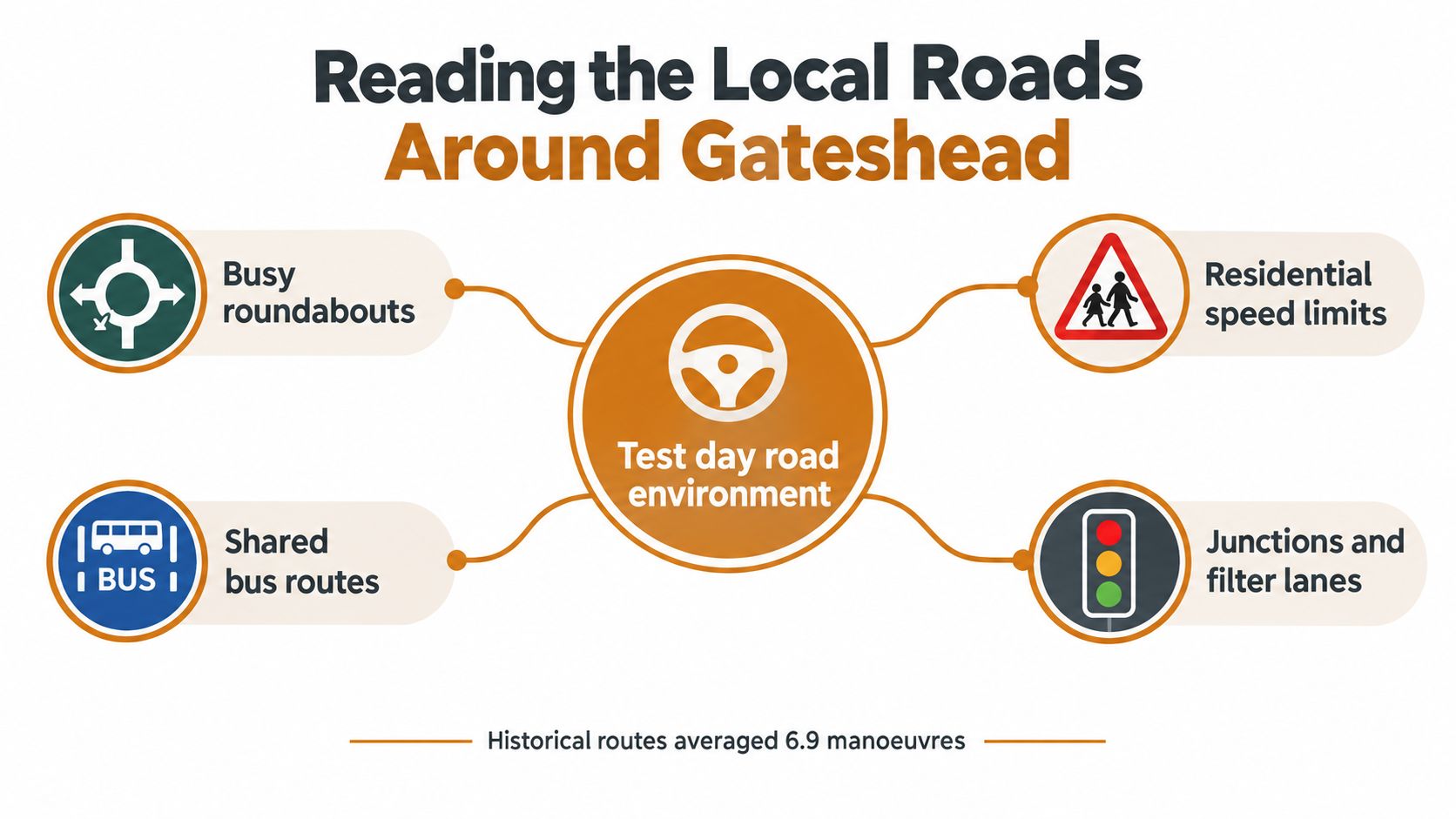
The point isn't to count roundabouts during a lesson. It's to understand why a small lapse can be repeated several times in one drive.
Match each road type to a skill
- Roundabouts: Practise choosing the lane early, reading arrows and signs, checking mirrors before changing position and maintaining a safe speed on approach. Don't drift across lanes because the exit suddenly appears.
- Dual-carriageway approaches: On the A1 slip-road approaches, A184 and similar faster sections, work on mirror checks, acceleration, joining traffic and leaving the road without braking sharply or missing a sign.
- Urban roads: Waterside Drive, Wellington Road and Riverside Way can lead into environments where meeting traffic, low-speed control and independent navigation matter. Keep scanning for parked vehicles, pedestrians and changing priorities.
- Junctions and signals: Traffic-light-controlled junctions test more than stopping on red. Watch lane arrows, filter signals, cyclists, pedestrians and the road beyond the junction before committing.
Road names can help your instructor choose useful practice areas. They shouldn't become a script. If you want broader ideas about practising varied roads and making a journey purposeful, the Blade Auto Keys road guide is a useful reminder that familiarity should support observation, not replace it.
The DVSA no longer publishes current official routes because examiners need tests to represent real driving conditions. Older maps may mention Seventh Avenue, Queensway, Eastern Avenue, Kingsway, Western Avenue, Centralway and Dukesway, but they're historical or unofficial aids.
Practise the conditions, not the order. An examiner can send you through familiar roads in an unfamiliar sequence, and safe driving must survive that change.
How 2026 DVSA Rule Changes Affect Rebooking
The 2026 rules make cancellation hunting a learner's responsibility and make each change more valuable. The DVSA guidance on changes to driving-test booking rules explains the process candidates must follow.
From 31 March 2026, a car test booking can be changed only twice. From 12 May 2026, only the learner can book, change, cancel or swap the appointment. From 9 June 2026, a moved test is restricted to one of the three nearest centres.
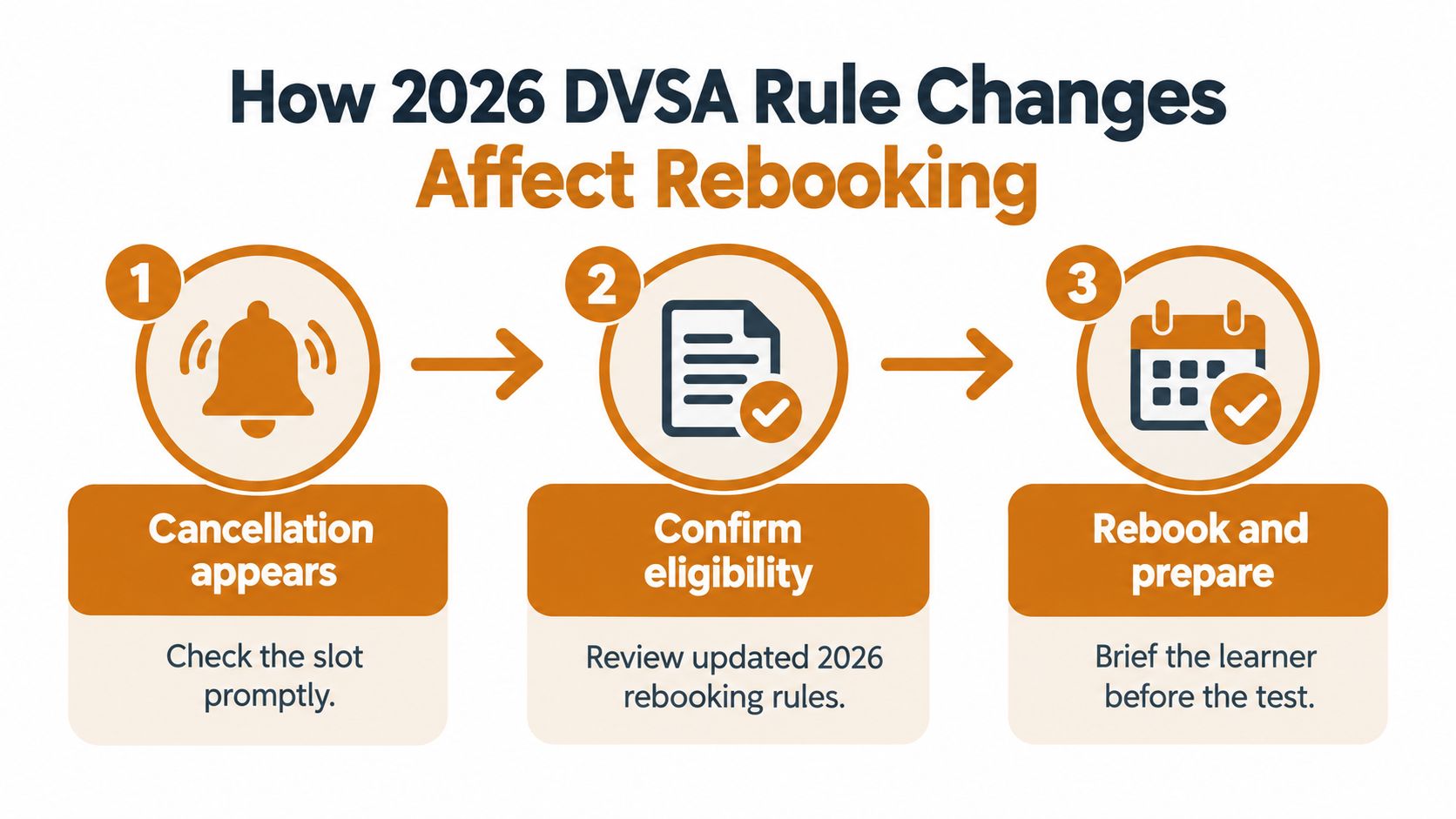
Decide before the alert arrives
An earlier Gateshead slot is useful only if you're ready to take it. Before changing anything, ask:
- Can you attend at that exact time?
- Can your instructor provide the necessary lessons and the test itself?
- Will the earlier date leave enough preparation for roundabouts, faster roads and independent driving?
- Is the centre within the permitted local group?
- Have you already used one or both changes?
If the answer to any of the first three is no, don't grab the appointment just because it's earlier. An unsuitable date can consume one of your two changes and leave you with less flexibility later.
You should also understand the 10-full-working-day threshold for refunds and changes in DVSA guidance. A late change may have financial consequences, while cancelling can mean losing the existing booking and having to arrange a new one rather than preserving your place.
The new booking rule: Your instructor can advise you, but you must complete the booking action yourself.
That changes the instructor's role. An ADI can help you assess whether a slot fits your ability and diary, but can't log in and make the change on your behalf. Keep your DVSA login details available, and inspect the centre, date and time carefully before confirming.
The 37.5% Gateshead pass rate is another reason not to rush an unready learner into an early appointment. The goal is not merely to reach the test sooner. It's to reach it prepared enough to deal with the centre's road mix.
For further detail on how the milestones affect cancellation decisions, see this explanation of the new DVSA driving-test rules. Treat third-party services as notifications only. The learner remains responsible for the actual DVSA transaction.
Practising Transferable Skills Instead of Memorising Routes
Route memorisation is the wrong target at Gateshead. The DVSA stopped publishing current routes so candidates would develop observation, judgement and planning instead of learning a fixed sequence of turns. The examiner can use familiar roads, but the useful preparation is being able to respond when the next instruction isn't the one you expected.
Older Gateshead route lists still circulate online. They may mention roads such as Seventh Avenue, Queensway, Eastern Avenue, Kingsway, Western Avenue, Centralway and Dukesway, along with nearby A1 slip roads. Use those names as prompts for your instructor, not as a rehearsal script.
What to practise instead
Start with roundabout entries from different approaches. Ask yourself which lane is correct before you reach the markings, then keep checking signs and traffic rather than relying on memory. Practise recovering calmly if you realise you're in the wrong lane. A safe, planned decision is better than a sudden swerve to reach a memorised exit.
Next, build mirror-signal-positioning routines. Check what's behind before changing speed or direction, signal when it helps other road users and position early enough that the manoeuvre looks deliberate. On faster roads, add acceleration and safe merging. On the A1 and A184 approaches, you need to join and leave without hesitation that creates risk.
Independent driving deserves proper practice too. Follow a sat nav or road signs on roads you haven't rehearsed, and accept that a missed turn isn't automatically a fault. The fault comes from reacting unsafely, not from choosing a different legal route.
For residential sections around Dunston, work on meeting traffic, clearance from parked vehicles, low-speed steering and changing priorities. Your instructor should vary the direction of travel and avoid giving you prompts that allow you to drive from memory.
A good mock test should feel slightly unfamiliar. If you only pass when your instructor tells you every lane in advance, you're not ready for Gateshead's independent-driving demands.
Practical Tips That Improve a Gateshead Pass Attempt
The week before your test, stop collecting random route videos and work through weaknesses in order. Your final preparation should make the drive calmer and more predictable, not fill your head with extra information.
Start with a warm-up lesson that resembles the test. Drive to Waterside Drive using the same types of roads you're likely to meet, then practise a mixture of roundabouts, junctions, faster-road sections and residential streets. Don't spend the whole lesson parked beside the centre discussing what might happen.
Priorities for the final lessons
- Roundabout decisions: Ask your instructor to give destinations rather than lane-by-lane instructions. Make the lane choice yourself, then explain afterwards what you saw.
- Mirror routines: Practise mirrors before signalling, changing speed, moving position and turning. The check needs to support a visible action.
- Vehicle safety questions: Say the “tell me” answers out loud and practise the “show me” controls without looking down for too long.
- Independent driving: Use a sat nav or signs on roads you don't know perfectly. If you take a wrong turn safely, continue rather than panic.
- Nerves: Breathe before moving away, take your time at observations and don't let a minor mistake dictate the rest of the drive.
A calm correction beats a hurried rescue. If you miss a direction, follow the road safely and wait for the next instruction.
Your instructor should also check vehicle basics, including tyres, lights, mirrors, seat position and fuel. You want the car to feel routine before you leave the centre, because unfamiliar controls make a demanding road environment harder.
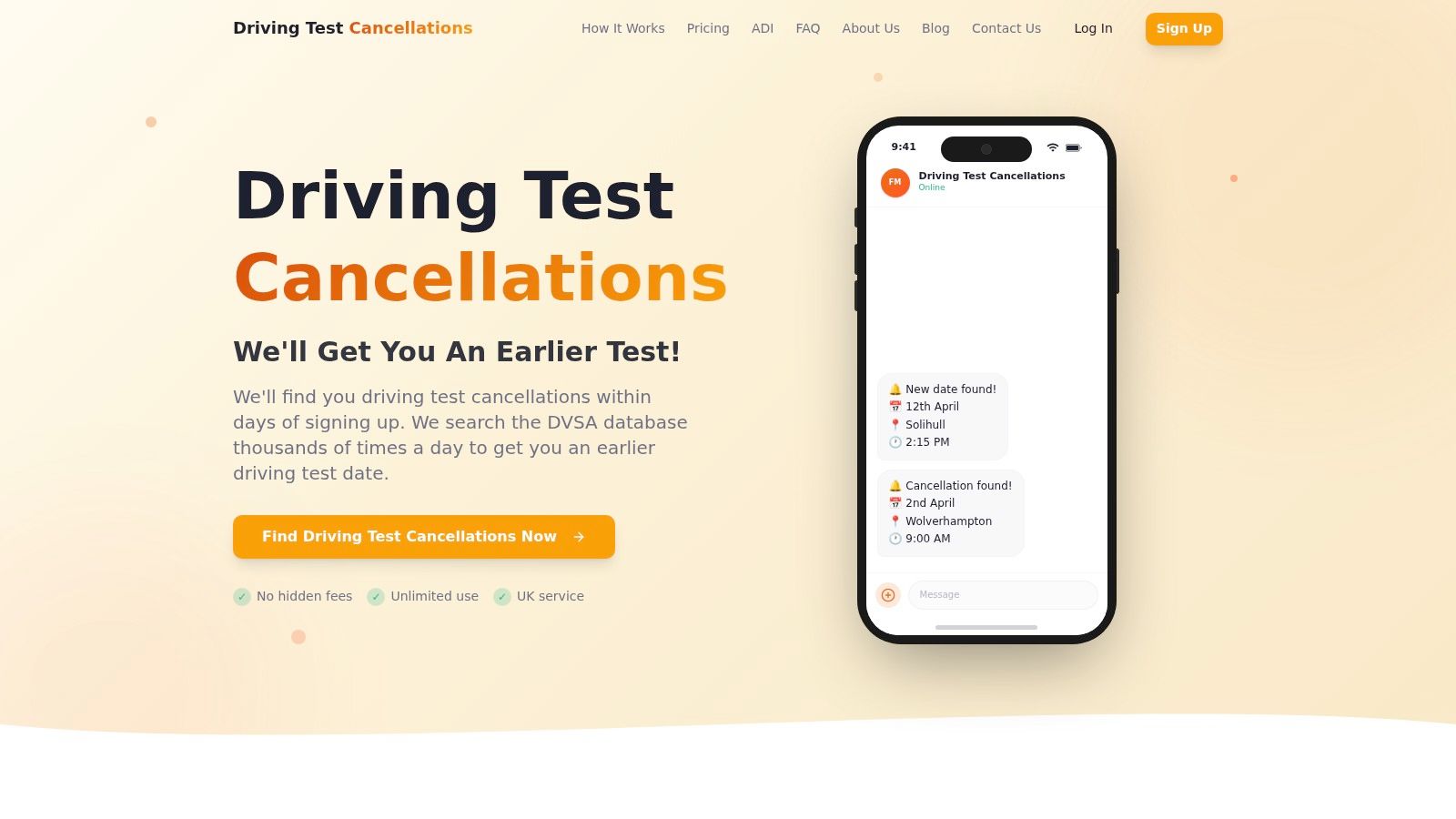
A cancellation alert is worth acting on only when the date fits your preparation and instructor availability. The two-change limit means you shouldn't accept every earlier slot and sort out the consequences later. If you use a notification service, it can tell you that an appointment has appeared, but you still have to book, change or cancel through the DVSA yourself.
Use the driving-test preparation guidance to check the basics, then tailor your practice to Gateshead. The centre's pass rate isn't your personal forecast. Arrive with the car familiar, the road skills practised and the booking rules understood.
Gateshead Test Centre Questions Worth Answering
Is Gateshead's pass rate a reason to choose another centre?
Not by itself. A different centre may offer an earlier date, but you'll need to learn its road environment and arrange suitable practice. Choose the centre where you can prepare properly, not just the one with the most appealing headline figure.
Should I move to an earlier appointment?
Only if you can attend, your instructor can support it and your current ability is ready. From 31 March 2026, you have only two booking changes, so an earlier slot isn't automatically a bargain.
When should I look for cancellations?
Check when your diary and preparation are flexible. An alert is useful when it gives you a realistic option, not when it tempts you into a date you can't cover.
What does my instructor handle?
Your instructor can assess readiness, plan lessons and advise on Gateshead's road types. From 12 May 2026, you must personally book, change, cancel or swap the car test.
What should I remember about the centre?
Remember the location, Waterside Drive in Dunston, and prepare for varied roads rather than a fixed route. Lane choice, observation and calm decisions will help more than memorising every turn.
Driving Test Cancellations monitors DVSA availability and sends alerts when earlier Gateshead appointments appear, while you remain in control of the actual booking. Visit Driving Test Cancellations to monitor suitable centres and respond quickly when a date fits your instructor, diary and preparation.