Brancroft Way Enfield is primarily an LGV facility at 33 Brancroft Way, with only limited car tests reported, so the centre and vehicle category on your confirmation must be checked carefully. The site recorded 474 tests and 201 passes in 2024–25, a 42.4% pass rate, but that figure needs context before you use it to judge your own chances.
You may be searching for an earlier car test, checking the address on a DVSA email, or standing outside a goods-vehicle site wondering whether you've arrived at the right place. Brancroft Way doesn't behave like a typical suburban car test centre. Its identity, layout and test availability can cause more practical confusion than the driving itself, particularly if you assume every Enfield booking is held at the same venue.
Table of Contents
- Understanding Enfield Brancroft Way Test Centre
- Pass Rates and Test Statistics
- Navigating the Local Test Route
- Getting There and Parking and Transport
- Booking Rules and Changes
- Final Preparation Tips
Understanding Enfield Brancroft Way Test Centre
Test-day nerves are bad enough without discovering that the centre you've selected is mainly set up for large goods vehicles. Enfield Brancroft Way is a DVSA site at 33 Brancroft Way, Brimsdown, Enfield, EN3 7NJ, and available local information describes it primarily as an LGV facility with a limited number of car tests. The nearby Enfield car centre at Solar Way is a separate location, so “Enfield” alone isn't enough to confirm where you need to go. Local centre information distinguishes Brancroft Way from Solar Way.
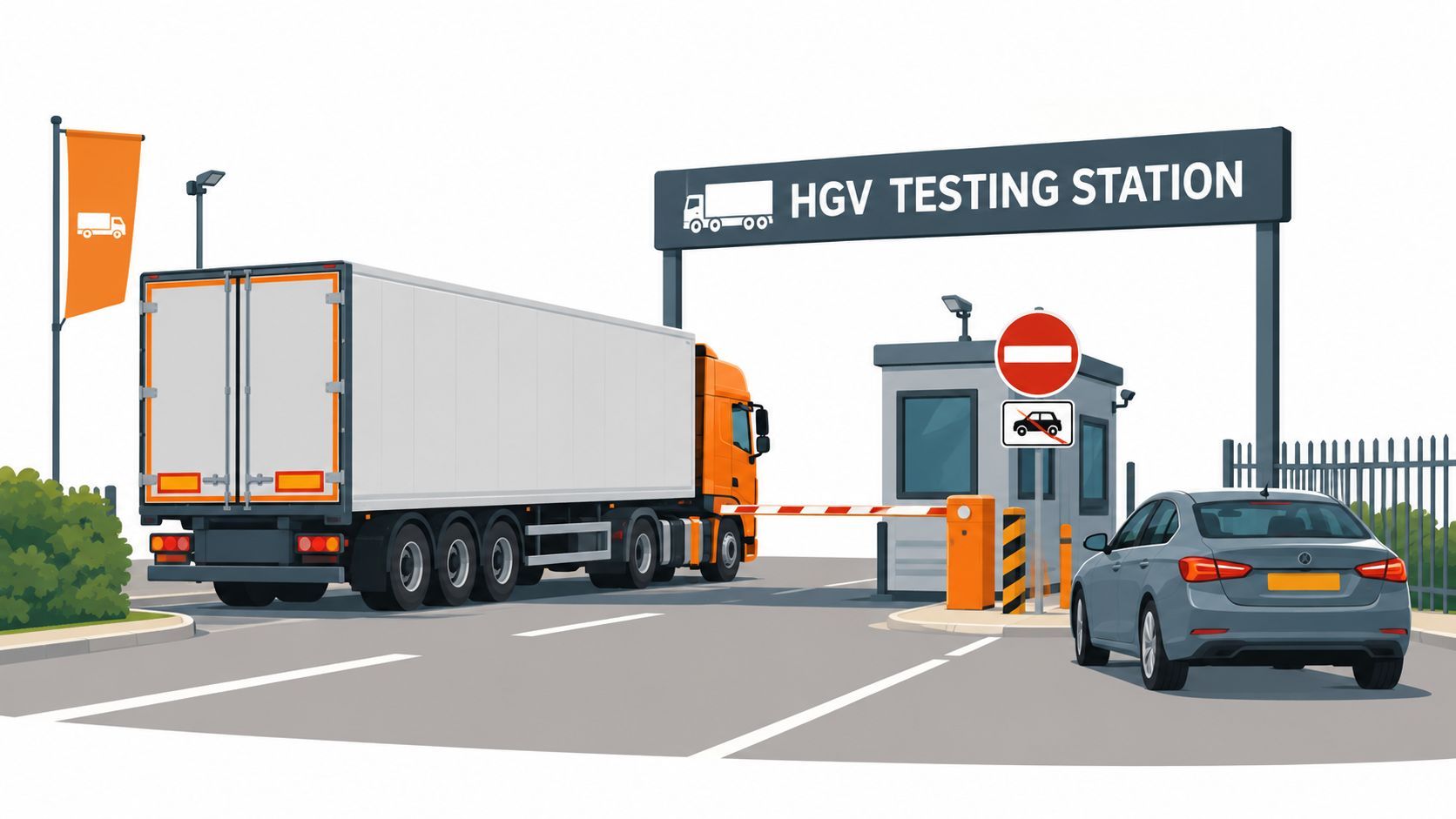
A learner with a car booking can therefore face two separate checks. First, confirm that the booking is for a car practical test, category B, rather than LGV, lorry or another vehicle class. Second, confirm the exact centre address. Don't rely on a sat-nav search for “Enfield driving test centre” because it may direct you towards Solar Way or another Enfield result.
The local setting
Brancroft Way sits in the Brimsdown and Enfield Highway urban area, within the Brimsdown electoral ward of the London Borough of Enfield and the Enfield North parliamentary constituency. The road is associated with postcode sectors including EN3 7PL and EN3 7QE, while part of the wider road area includes EN3 7UY, a postcode that entered use in May 2002. The postcode and geographic profile provides the relevant local identifiers.
That matters because this isn't an isolated test compound surrounded by quiet country lanes. Candidates move quickly between industrial surroundings, residential roads and busier urban traffic. Before test day, check the confirmation, inspect the approach on a map and plan where you'll wait if the site has no suitable public parking.
Practical rule: Treat Brancroft Way and Solar Way as different centres from the moment you book. A correct town name doesn't guarantee a correct venue.
Pass Rates and Test Statistics
The latest completed figure shows a 42.4% pass rate for 2024–25, compared with a reported national average of approximately 50.1%. That is a difference of 7.7 percentage points. The centre history is attributed to DVSA datasets DRT122A and DRT122F. The centre history is attributed to DVSA datasets DRT122A and DRT122F.
| Year | Tests | Passes | Pass Rate |
|---|---|---|---|
| 2017–18 | 191 | Not stated | 44.0% |
| 2018–19 | 76 | Not stated | 34.2% |
| 2019–20 | 33 | Not stated | 39.4% |
| 2023–24 | 375 | 173 | 46.1% |
| 2024–25 | 474 | 201 | 42.4% |
| 2025–26 | 362 | 167 | 46.1% |
The figures need context before you use them to choose a test centre. Several years contain fewer than 500 tests, and Brancroft Way is described as primarily an LGV centre with limited car availability. Its annual results may therefore reflect a different vehicle mix from a standard, high-volume car centre. A relatively small change in successful tests can also move the yearly percentage noticeably.
What 42.4% actually means for a car candidate at Brancroft Way
The percentage does not show that the route is unfair, and it cannot predict an individual car test. Results may reflect vehicle categories, candidate experience, traffic conditions, examiner availability and the number of tests included. For a car candidate, the LGV-heavy operation is the specific complication. Check that your booking is for a car practical test, category B, rather than an LGV or another class before treating the centre's headline figure as relevant to you.
The centre's DVSA series, DRT122A and DRT122F, reports 42.4% from 474 tests in 2024–25. A published route dataset gives the same result for April 2024 to March 2025, alongside a different national comparison of 51.8%. Use that route dataset as context, not as an official personal forecast.
Use the percentage as background, not as a verdict on your chances. Brancroft Way may suit you if your instructor can provide regular practice for the local road conditions, your booking matches the correct vehicle category and the journey allows practical lesson scheduling. A higher published rate elsewhere offers little value if reaching that centre makes consistent preparation difficult.
Navigating the Local Test Route
A car test at Brancroft Way demands more than memorising a route. The centre's vehicle mix can create confusion, because LGV activity shares the local road network with car tests. Prepare for the roads your car practical test, category B, may use, rather than copying an LGV route or assuming every familiar road will appear.
Car routes can include Brancroft Way, Brimsdown Avenue, Hertford Road, Mollison Avenue, Turkey Street, residential roads, junctions and roundabouts. A published example covers approximately 8.2 km, lasts about 20 minutes and uses 12 roads, but it remains an example, not a guarantee of the roads on your appointment. The route description explains the local road mix and its limitations.
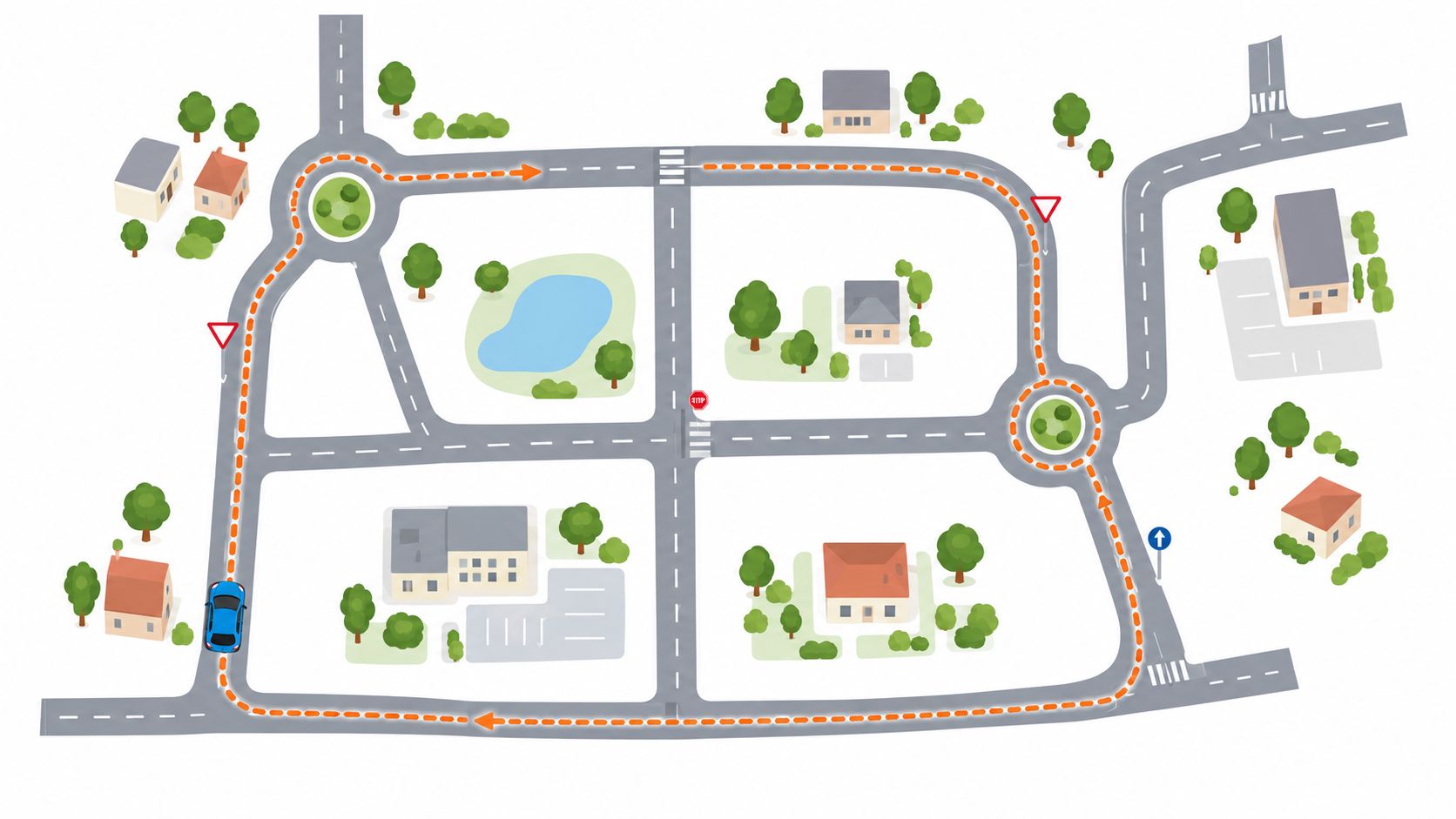
Begin near the centre and extend practice across the surrounding network. On Brancroft Way and nearby industrial roads, practise smooth moving-off while checking for larger vehicles, changing lane positions and restricted views. Hertford Road and Mollison Avenue require progressive speed control, early observation and planning before the next junction.

Where candidates lose control of the drive
Roundabouts and busy junctions test decisions, not diagram recall. Approach slowly enough to identify the correct lane, read signs and respond to traffic already circulating. A route that feels familiar still requires a fresh observation before you commit.
Residential roads create a different risk. After a faster road, learners can carry excess speed into a narrow street, overlook a gap beside parked vehicles or miss pedestrians and emerging traffic. Practise deliberate speed changes and regular scanning rather than matching the apparent pace of the road.
Independent driving should cover both car-specific handling and the transition between road types. Ask your instructor for directions with enough notice to read signs and lane markings, while retaining responsibility for your decisions. The examiner is assessing observation, planning and control, not memorised route recitation.
This visual route guide can help you recognise the relationship between the roads before a lesson:
The single most valuable exercise is the transition itself. Repeat the change from residential streets to higher-flow roads until speed adaptation, mirror use and forward planning work together.
Getting There and Parking and Transport
A calm arrival starts with a location check, not with a last-minute sat-nav search. Put 33 Brancroft Way, Brimsdown, Enfield, EN3 7NJ into your journey planner, compare it with the address on the DVSA confirmation and allow time to identify the entrance. The site has limited parking and operates in a busy goods-vehicle environment, so don't assume you'll be able to wait comfortably in the centre car park.
If you're driving, avoid unauthorised practice or waiting in restricted areas. A learner who arrives early but blocks access for heavy vehicles has created an avoidable problem before the test begins. Arrange a safe meeting point with your instructor and confirm whether the car can be left legally nearby.
Public transport can work, but check the final walking section in advance. Brimsdown and Enfield Highway are urban areas with links by road and rail, yet a route that looks short on a map may involve industrial access roads, crossings or an awkward approach with limited shelter. Your instructor may prefer to meet you away from the entrance and walk in together.
Accessibility needs
Online facility descriptions conflict on wheelchair access. One listing reports no wheelchair access and limited parking, while another claims ramps and accessible toilets. That disagreement isn't something a candidate should resolve by guesswork, especially at a site primarily associated with LGV testing. The conflicting accessibility information is documented in the available centre listings.
Contact the DVSA before test day if you need step-free entry, an accessible toilet, adapted-vehicle arrangements, suitable parking or a clear waiting plan. Ask them to confirm the centre itself, not just the public roads used during the drive, and check that your requirement is recorded against the booking.
If you're comparing availability with another Enfield location, keep the centres separate. Enfield Innova Business Park test-centre information shouldn't be treated as evidence about Brancroft Way's car-test operation.
Booking Rules and Changes
The booking process has become more personal for car candidates. From 12 May 2026, only the learner driver can book, change, swap or cancel a category B practical test. Driving instructors, schools and third-party services can't carry out those actions on a pupil's behalf. The DVSA terms explain the restriction on who can manage a pupil's booking.
The DVSA doesn't operate a formal waiting list or cancellation list. Standard appointments are released 24 weeks ahead, with new availability normally added at 6am every Monday. Earlier appointments can appear whenever another learner changes or cancels, at any point during the week. The official GOV.UK booking service explains how appointments and cancellations work.
A cancellation monitor can send information about an earlier Brancroft Way slot, but it can't secure that slot for you. Driving Test Cancellations is one notification-only option that monitors selected DVSA centres and sends alerts, while the learner signs in and completes the change personally.
Protecting your existing booking
A car practical test can be changed twice under the 2026 rules, reduced from the previous limit of six changes. If you've used both changes, you'll need to cancel the existing test and book a new one. The DVSA change-test guidance sets out the current limit and cancellation process.
Keep three details in front of you before accepting an earlier slot:
- Centre and category: Confirm Brancroft Way rather than Solar Way, and check that the appointment is for the required vehicle class.
- Change allowance: Know whether you've already changed the test twice.
- Refund position: A full refund for a car test normally requires at least 10 full working days' notice, so changing or cancelling too late can put the test fee at risk.
The official fee is £62 on weekdays and £75 for evening, weekend and bank-holiday appointments. GOV.UK lists the DVSA car practical test fees and warns learners to use the authorised booking service. An earlier cancellation can therefore be convenient but more expensive if it falls into an out-of-hours slot.
For a plain-English explanation of the wider changes, see the guide to DVSA driving test new rules, then rely on your live GOV.UK booking screen for the final action.
Final Preparation Tips
Brancroft Way rewards preparation that matches the site, not vague familiarity with “Enfield”. Before leaving home, check your provisional licence, test confirmation, vehicle category and centre address. Confirm the car is suitable and arrange an arrival plan that doesn't depend on parking inside a busy goods-vehicle compound.
Use your final lessons on Brancroft Way, Brimsdown Avenue, Hertford Road and Mollison Avenue, but practise decisions rather than memorised turns. Work on roundabout observation, lane discipline, speed changes and independent navigation in both residential and heavier traffic.
For a broader pre-test checklist, these practical driving-test preparation tips can help. If you're also planning a journey involving airport shopping, Schiphol duty free travel tips is a useful separate travel resource, but keep the test-day essentials focused on your licence, confirmation and route plan.
Driving Test Cancellations monitors DVSA availability and sends alerts when earlier appointments appear at your selected centres, while you rebook directly through GOV.UK. If Brancroft Way is your preferred venue, visit Driving Test Cancellations to check how its cancellation alerts could fit your booking plan.