You've passed your theory test, your instructor says you're nearly ready, and the practical booking system offers you a date so far away that your diary may change twice before test day. Then a cancellation-alert service appears, promising to find something earlier. The obvious question is whether it's worth paying for.
My view is straightforward. These services can be useful, but only when you judge more than the number of earlier slots they find. A proper driving test cancellations review should ask three things: does the service identify workable appointments, does its process keep you safe under the DVSA rules that took effect in 2026, and does switching still make financial sense once you include your instructor's availability, test fees and limited changes?
Table of Contents
- The Waiting-Time Problem Driving Test Cancellations Is Built Around
- How the Service Actually Works
- Why Earlier Slots Are Worth Chasing in 2026
- Pros and Cons From Real Use
- What It Really Costs to Switch
- Who It Helps Most and Who Should Skip It
- What ADIs and Driving Schools Should Look For
- The Safety Case for Learner Control
The Waiting-Time Problem Driving Test Cancellations Is Built Around
A learner I spoke to had a test booked months ahead and a theory pass already in hand. Their employer could offer only a narrow range of weekdays, their instructor's diary was filling up, and the centre showed a wait that made regular manual checking feel pointless. Paying a third party looked tempting, but the core concern wasn't just finding an earlier date. It was finding one they could realistically attend.
That's the pressure cancellation-alert services are built around. The DVSA's national figures show why the market exists. In its 2024–25 Annual Report, the agency recorded 1.96 million car practical tests between April 2024 and March 2025, yet the average wait increased from 16.1 weeks to 21.9 weeks over the same period (DVSA Annual Report and Accounts 2024–25).
A cancellation finder can reduce the time you spend refreshing the booking page, but it can't make an unsuitable appointment suitable. Before paying, check your local position and the likely alternatives in this guide to driving test waiting times.
The three questions that matter
Does it find earlier tests? Alerts are useful only if they arrive quickly enough and contain a date, time and centre you can accept.
Is the workflow lawful and safe? Since the 2026 rule change, the learner must retain control of the booking. A notification service is not the same thing as a service that logs in and changes the test for you.
What does switching really cost? The subscription is only one part of the calculation. You may use one of your permitted changes, need extra lessons, travel further or accept a more expensive test time.
That's the decision this review is designed to support. If your diary is flexible, waiting may be sensible. If your theory pass, instructor or work schedule creates a hard deadline, earlier-slot monitoring deserves closer attention.
How the Service Actually Works
The notification-only model is simple. You already have a car practical test booked, you choose suitable centres and date preferences, and the service checks DVSA availability for earlier appointments. When it detects a possible match, it sends an SMS with the date, time and test centre. You then sign in to the DVSA booking service and make the change yourself.
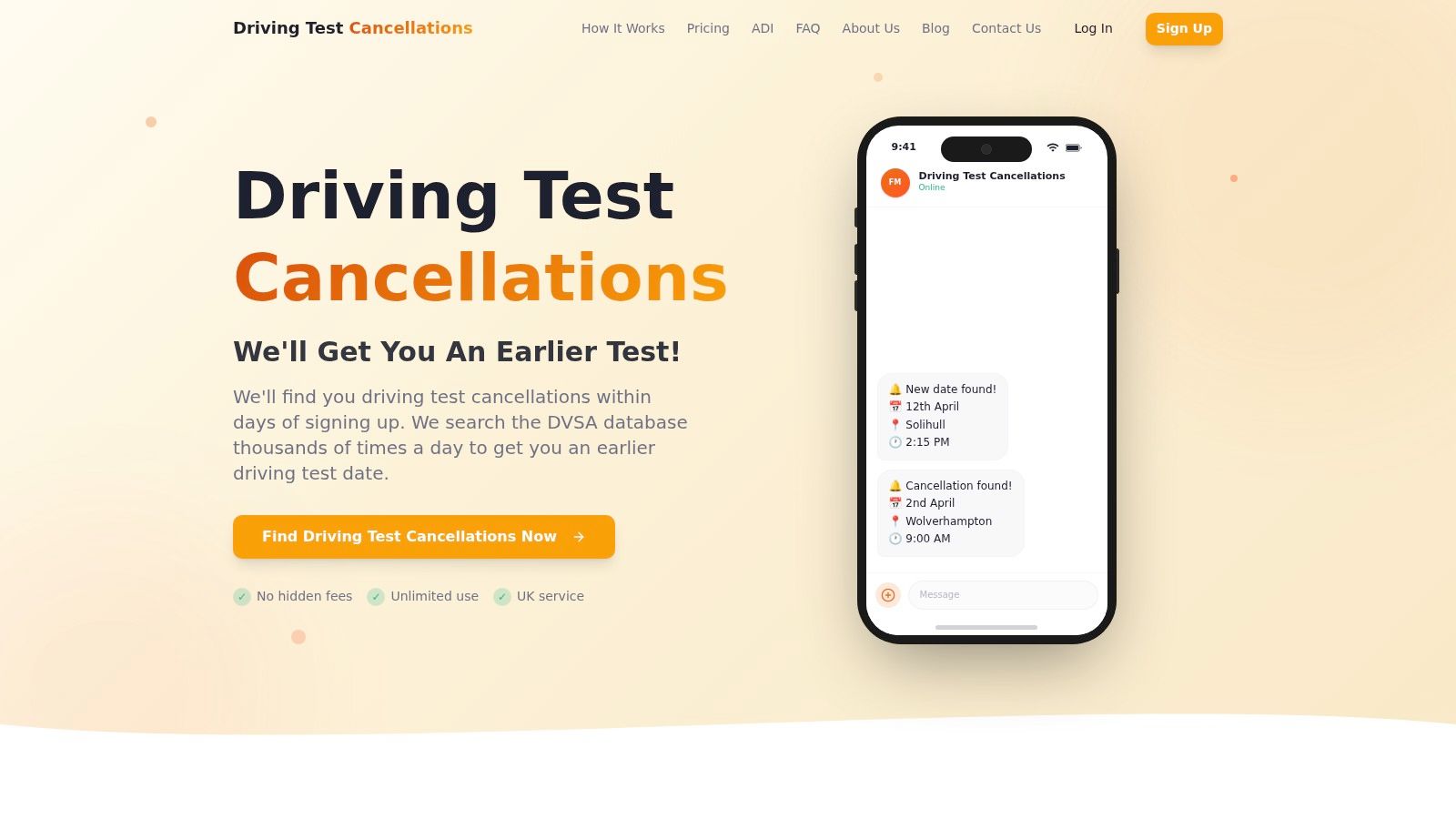
What happens after an alert
Set the search area. The account can monitor up to three preferred test centres, which is useful if nearby centres are realistic for your instructor and vehicle.
Define the acceptable slot. A weekday morning may suit your instructor, while an evening or weekend may not. Don't leave these preferences vague if you can't attend at short notice.
Wait for notification. The platform scans availability and sends alerts rather than completing the booking.
Rebook manually. Open the DVSA service, check that the slot is still available, and confirm the change yourself. The service's how it works guide should be read alongside the official rules, not instead of them.
The legal boundary is now decisive. From 12 May 2026, only the learner can book, change, cancel or swap a car practical driving test, which means a compliant service can only notify and the learner must complete any change themselves through the DVSA (DVSA practical test business service terms).
That means you shouldn't hand over DVSA login details to a service that claims to act for you. An alert can save checking time, but it doesn't remove your responsibility to confirm the centre, time, instructor and vehicle before accepting.
Why Earlier Slots Are Worth Chasing in 2026
Waiting times vary sharply by nation. In a December 2024 DVSA statement, approximate average waits were 13 weeks in Wales, more than 15 weeks in Scotland and nearly 21 weeks in England (DVSA statement on car practical driving-test waiting times). That makes cancellation monitoring more useful in some areas than others, and it makes a single national average a poor guide for your decision.
London shows the pressure clearly. London Assembly research using DVSA data put the average wait at about 22 weeks in February 2025, compared with roughly eight weeks around a decade earlier (London Assembly research on driving-test waiting times). Most London test centres had reached the maximum booking horizon reported in that research.
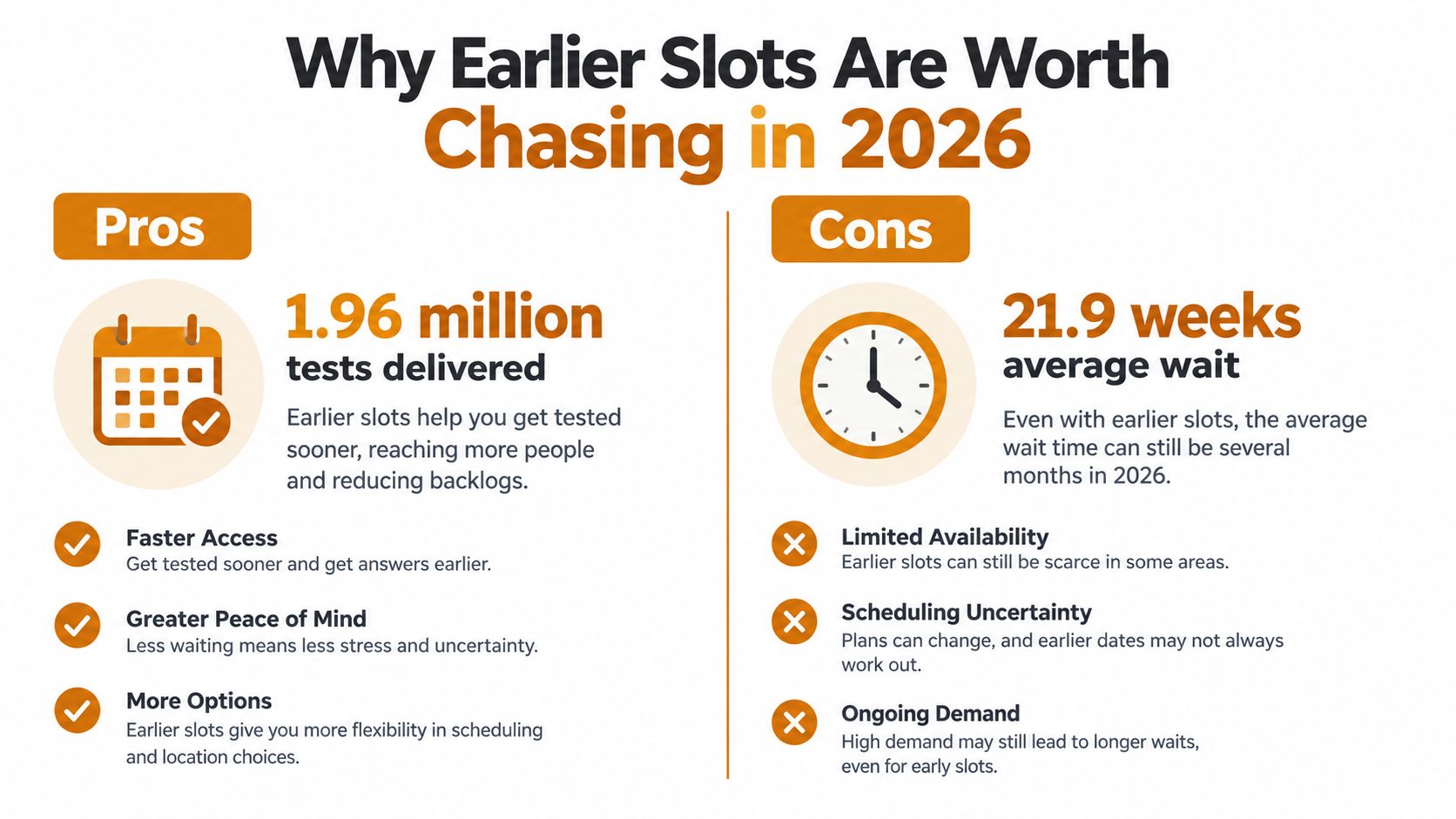
The practical conclusion
An earlier slot only helps if you can prepare properly, attend reliably and use the same vehicle. After the 12 May 2026 rule change, learner control is part of the value calculation. You must make any change yourself through the DVSA, so an alert service should save search time without taking control of the booking.
Monitoring several nearby centres can widen the available pool, but choose only centres your instructor can support. Confirm lesson availability, vehicle access and travel time before switching. A slot that looks earlier can create extra lessons, missed work or a long journey.
The strongest use case is a learner facing a real deadline, not someone chasing an earlier date for its own sake. If the switch leaves too little preparation time or forces you to cancel lessons, the apparent gain is smaller than it looks. Use Driving Test Cancellations as an alert tool, then judge the slot against safety, availability and the full cost of changing plans.
Pros and Cons From Real Use
The main benefit is convenience. A service that checks continuously can replace repeated manual refreshing, which is especially helpful when a learner is working, studying or looking after children. SMS alerts also suit the reality of cancellations, because a slot may appear when you're away from a laptop.
The three-centre limit is sensible for most learners, provided those centres are practical. A free trial that sends sample alerts can help you understand the notification format before paying, while a money-back promise during the initial period gives some protection if no cancellation appears. Still, read the terms carefully. A guarantee isn't the same as a guaranteed earlier test.
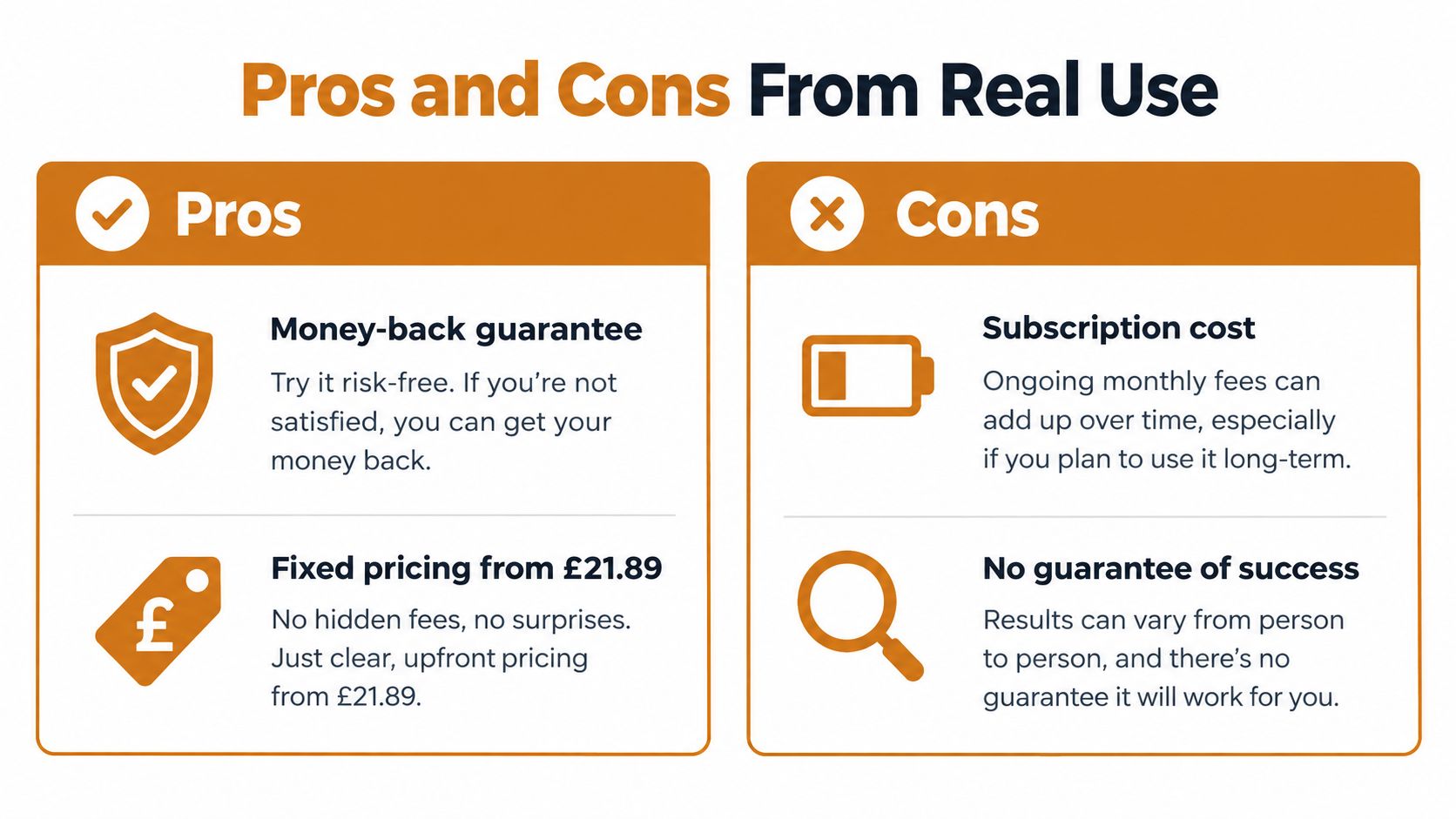
Where the trade-off bites
The published plan starts from £21.89, with unlimited alerts and fixed pricing according to the publisher's information. That makes the cost easier to understand than a service with unclear fees, but it still needs to earn its place in your budget.
The weak point is control after the alert. The service doesn't know whether your instructor has a free slot, whether the test car is available or whether you can get time off work. You have to make that decision quickly, but not carelessly.
Practical rule: Never accept an earlier test until your instructor confirms the date and vehicle.
The service also shouldn't be judged on speed alone. A useful comparison should examine whether alerts show enough information for manual rebooking, whether the platform asks for DVSA credentials and whether its published results are explained clearly rather than presented as a promise. The site's own driving test cancellation app reviews are useful background, but you should still judge the workflow against your circumstances.
For broader consumer thinking about transparent guarantees, subscriptions and cancellation terms, these smart debt relief program insights offer a useful reminder: a headline promise matters less than the conditions attached to it.
My recommendation is to pay when manual checking is unrealistic and an earlier date has a clear practical value. Skip it when you can check yourself, your diary is open and the alert would probably force extra costs.
What It Really Costs to Switch
The subscription is only one part of the bill. A weekday DVSA car practical test costs £62, while an evening, weekend or bank-holiday test costs £75. You can change a booking a maximum of two times before cancelling and rebooking (GOV.UK guidance on changing a driving test).
So compare the full switching cost, not just the earlier date. A slot three weeks sooner can make sense if it helps you avoid a long delay and fits your instructor, car, travel plans and preparation. It makes little sense if you need extra lessons, an expensive journey or a change you may soon regret.
A realistic comparison
| Scenario | Service cost | DVSA fee | Changes used | Net effect |
|---|---|---|---|---|
| Earlier weekday slot that suits the instructor | From £21.89 | £62 | One | Pays for itself only when the earlier date avoids a meaningful delay or extra preparation cost |
| Earlier evening slot when weekday availability is impossible | From £21.89 | £75 | One | Brings the test forward, but the test fee is higher |
| Alert arrives for a centre you can't reach | From £21.89 | Existing fee remains | None | Adds no practical saving because the slot cannot be used |
| Second acceptable change after another alert | From £21.89 | Existing fee remains | Two | Uses all flexibility, so another move requires cancellation and rebooking |
Moving from a distant date to a suitable weekday slot three weeks earlier does not reduce the DVSA charge. The subscription pays for monitoring. Its value comes from what that earlier appointment changes for your preparation, work and instructor arrangements.
Refund timing adds another risk. DVSA normally requires 10 full working days' notice for a full refund when cancelling a car test. Mondays to Saturdays count as working days, while Sundays and public holidays do not. As noted above, an alert close to the test date leaves less time to reverse a poor decision.
The cheapest alert is the one you can accept without using a change you may need later.
Before switching, get your instructor's confirmation, check the car, compare the journey and make sure the date matches your preparation plan. Pay for monitoring when manual checking is unrealistic and an earlier test has clear value. Skip the switch when the alert would create more cost or pressure than it removes.
Who It Helps Most and Who Should Skip It
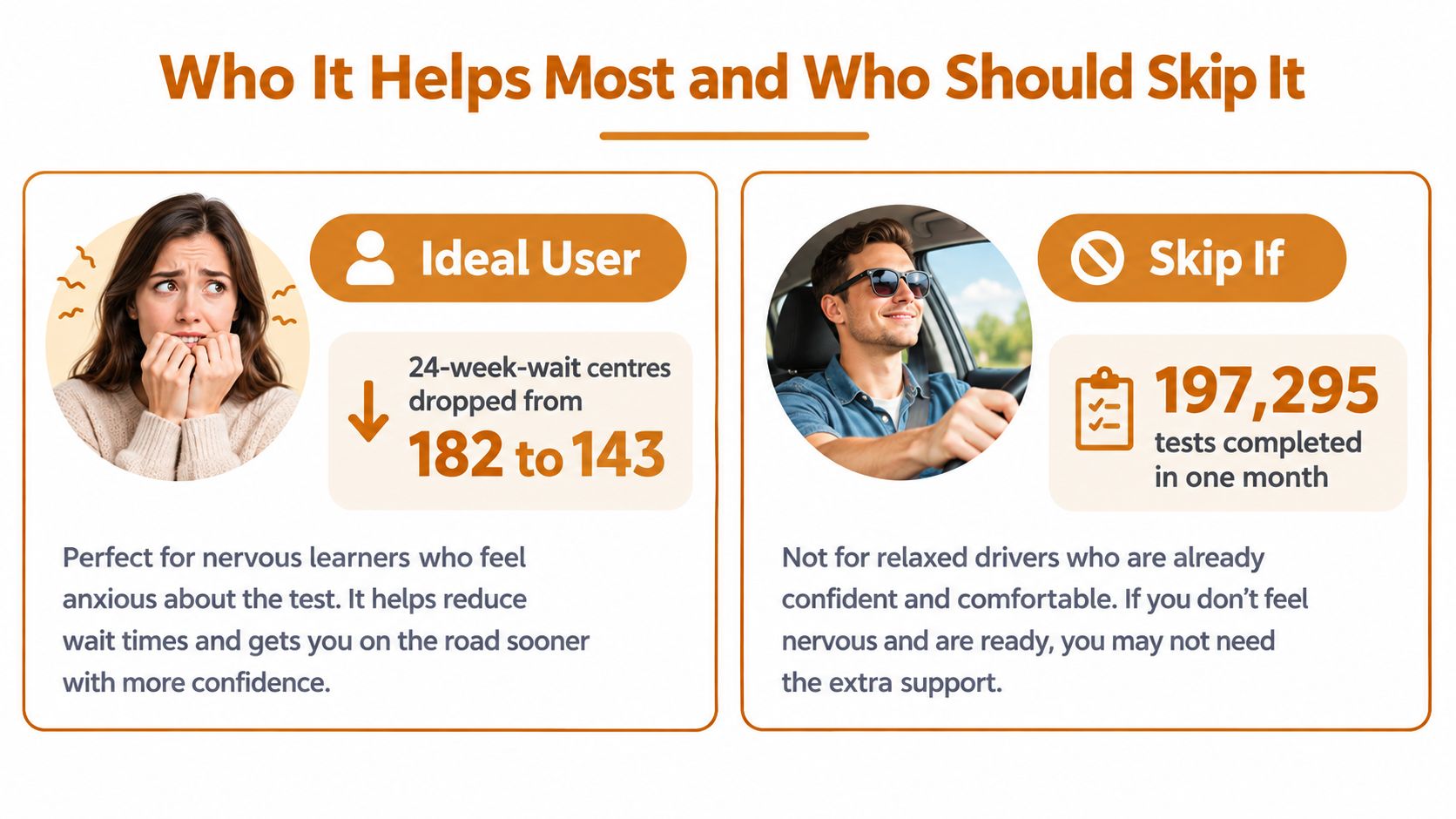
The strongest customer is a learner with a deadline. That might be a theory pass approaching expiry, an instructor who is moving away, an employer who has fixed a date for taking a licence, or a family timetable that leaves only a narrow window. For these learners, an earlier appointment can protect preparation already paid for and avoid a fresh wait.
The wider supply picture supports that distinction. Between 30 March and 27 July 2026, the number of centres showing a 24-week wait fell from 182 to 143, yet the national median wait rose from 9.0 to 11.1 weeks (DVSA instructor update on waiting times). The same update recorded 197,295 completed tests in July 2026, but higher monthly provision still didn't guarantee that an individual learner received a shorter wait.
Make the go-or-skip decision
Go ahead if:
- Your deadline is real: You need a test before a theory pass, work commitment or instructor change creates a problem.
- Your centre choices are flexible: You can attend several nearby centres.
- Your instructor can react: They have told you which dates and times they can cover.
- You won't waste a change: You understand the remaining allowance and won't accept every alert impulsively.
Skip it if:
- You have plenty of time: A later test doesn't disrupt work, study or training.
- You can check manually: Regular checking costs you little and you're comfortable handling it.
- Your diary is rigid: An alert is unlikely to match your instructor, car and availability.
- You want certainty: No notification service can promise that a suitable cancellation will appear.
My blunt recommendation is to use alerts for a deadline, not for impatience. Flexible learners should book a sensible test and keep preparing rather than paying for a service that may produce dates they can't use.
What ADIs and Driving Schools Should Look For
For an ADI, the appeal isn't just finding an earlier date. It's reducing the daily admin of asking pupils to refresh the DVSA page, checking centre availability and chasing messages across a full cohort. A dashboard can put those pupils in one place, but the workflow must preserve the candidate's control.
Use a free trial to test practical questions, not just the appearance of the dashboard:
- Pupil matching: Can each alert be tied clearly to the right learner and existing booking?
- Centre coverage: Can you monitor the centres your pupils can realistically reach, rather than collecting unusable alerts?
- Notification detail: Does the SMS include the date, time and centre without forcing you to open several screens?
- Manual rebooking: Does the process make clear that the learner must sign in and change the test themselves?
- Commercial terms: Is the price charged per instructor, per pupil or by another arrangement?
- Data handling: Can you explain how learner information is stored and managed, especially for under-18 pupils?
The final point deserves attention. A UK-based operation and secure data handling may support a sensible GDPR process, but an ADI should still read the privacy information, limit access to what staff need and obtain appropriate consent where necessary. Don't assume that a convenient dashboard removes your responsibilities.
For schools, the right question isn't “How fast are the alerts?” It's “Can my team act on them without taking control away from the learner?”
A good system should leave the pupil with the DVSA login, the decision and the final confirmation. The ADI can help judge suitability, but shouldn't turn a notification tool into an unofficial booking service.
The Safety Case for Learner Control
The fastest-looking automation isn't automatically the safest option. A service that logs in for you may appear convenient, but it can interfere with the decisions that matter most, especially when each change has consequences and the acceptable test centres are restricted.
DVSA says that from 12 May 2026 only the learner can book and manage their own car practical tests, and that unofficial services which scan the booking system aren't allowed under its booking rules (DVSA announcement on unofficial booking services). That makes the operating model central to any review. A notification-only service leaves the candidate responsible for checking the opportunity and completing the change through DVSA.
Four checks before you trust an alert
Read the details. The message should identify the test centre, date and time clearly enough for a quick decision.
Protect your credentials. A service that asks for your DVSA password deserves careful scrutiny. Notification should not require somebody else to take over the booking.
Check the remaining changes. Don't treat every earlier slot as disposable. Keep track of how many changes you've used before accepting another.
Price the appointment properly. Confirm the test fee, instructor, vehicle, travel and preparation lessons before pressing confirm.
From 9 June 2026, DVSA restricted moves to one of the three nearest test centres, which makes centre selection even less forgiving. A slot that looks earlier may be useless if it places you outside the permitted or practical area, or if your instructor can't attend.
The best notification workflow gives you speed without removing judgement. It tells you what has appeared, then lets you decide whether the date is legal, affordable and sensible. That's why I favour a compliant alert model over any service that promises to do the booking for you.
For most learners, the recommendation is clear. Use a cancellation service when the wait threatens a genuine deadline and you've confirmed your acceptable centres and dates. If you do use one, choose the service that keeps your DVSA account and final decision in your hands.
Driving Test Cancellations monitors DVSA practical-test availability, sends SMS alerts with appointment details and leaves the learner to rebook directly through DVSA. If that notification-only approach fits your deadline and diary, visit Driving Test Cancellations to review the available options and try the alert process before committing.