You've failed your test, cancelled an appointment, or found that your current date no longer fits around work and lessons. You're now staring at the GOV.UK booking dashboard, with one upcoming test listed and a Change button waiting on the right. The temptation is obvious: click it, grab the first earlier slot and worry about the details later.
That's how learners waste one of their limited changes. A second failed attempt can mean another long wait, but a rushed move can leave you stuck with a date that doesn't suit your instructor, your confidence or your test centre. If you're about to rebook driving test arrangements, pause before selecting anything. The guide to booking a driving test is useful for the basic booking route, but the 2026 rules mean rebooking now needs more careful planning.
Table of Contents
- You've Just Decided to Rebook Your Driving Test
- The Rebooking Process on GOV.UK Step by Step
- DVSA Rules That Affect Every Rebooking in 2026
- Why Your Test Centre Choice Matters More Than the Date
- Practical Ways to Find an Earlier Slot
- Pitfalls That Cost Learners Time and Money
- A Quick Pre-Rebook Checklist Before You Click Confirm
You've Just Decided to Rebook Your Driving Test
Your test is weeks away, then a tempting earlier slot appears at a centre you barely know. It clashes with your instructor's holiday and leaves little time for practice. Clicking Change may feel like progress, but it can create a worse booking.
Before choosing a slot, check whether the date, time, centre or test type change uses one of your two permitted changes. The guide to booking a driving test explains the basic route, but the post-rule-change limits demand a more careful decision. You cannot assume you can keep changing until the right appointment appears.
My advice: treat an earlier appointment as an option, not a result. Keep it only if your lessons, travel and preparation all fit.
Check four points before you commit: how the GOV.UK booking screens work, whether you are within the 10-working-day notice window, how many changes remain, and whether another test centre gives you a realistic improvement. The learner must manage the booking, so do not rely on an instructor or family member to make the change for you. Centre choice now matters more than repeatedly refreshing one postcode.
Regional availability makes that choice important. Some areas offer little improvement at nearby centres, while a different centre may provide a workable date with a more manageable route and enough practice time. Slot hunting alone will not solve a poor centre decision.
The wider waiting-time problem is serious. In Great Britain, the average wait reached 22 weeks in September 2025, compared with just over 5 weeks in February 2020. Only 73 of 240 permanent test centres had a wait below 24 weeks at that point, according to the National Audit Office investigation into car driving test waiting times. Rebooking can save time when the booking works for you. A rushed change can send you back into the queue.
The Rebooking Process on GOV.UK Step by Step
Start from the official GOV.UK page for changing a practical driving test. You'll need to identify the booking before the system shows available appointments.
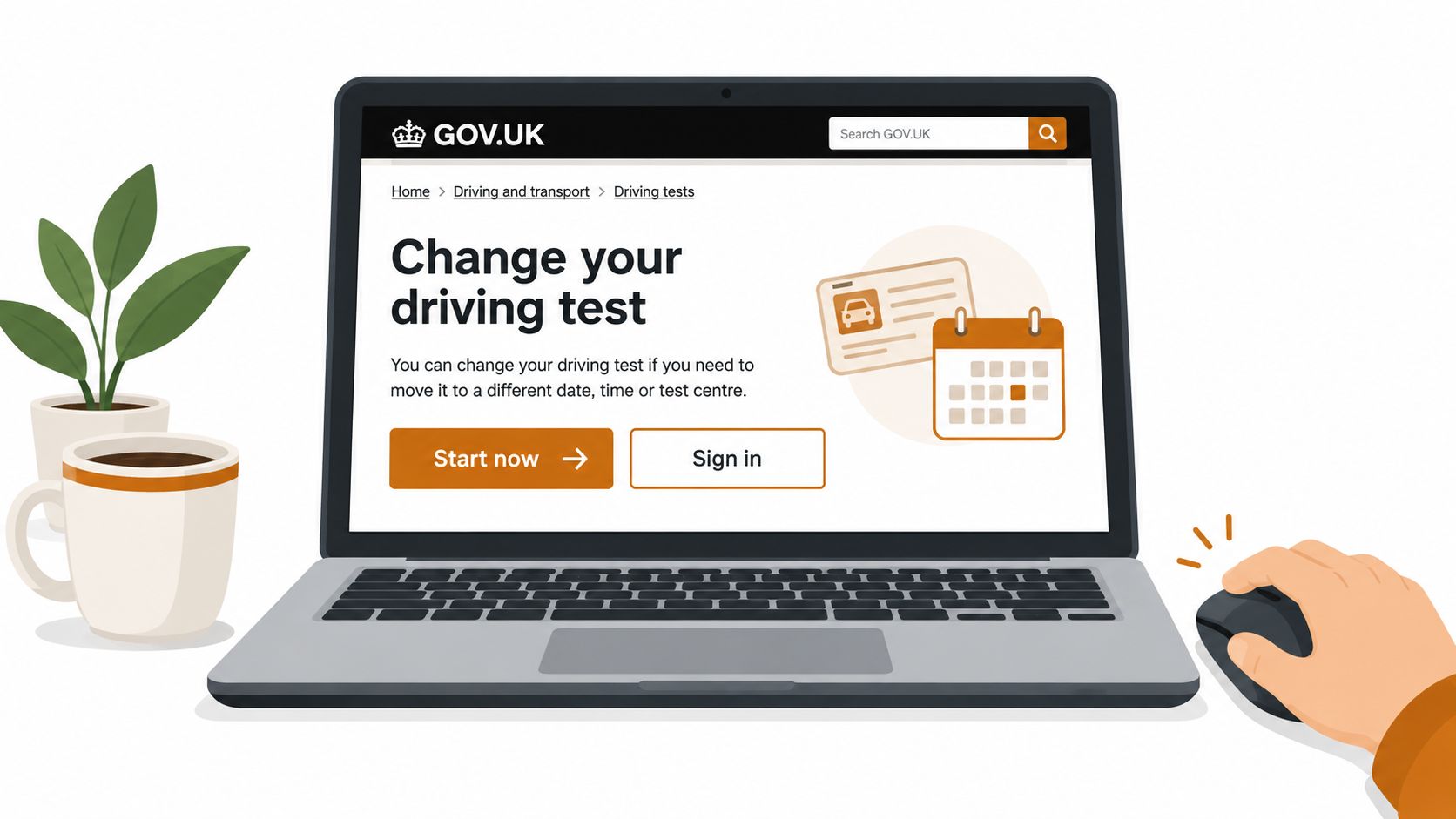
Have your details ready
The sign-in route may ask for your driving licence number, booking reference number or GOV.UK One Login. If you've got both a theory and practical booking, use the details connected to the practical test you want to manage. Don't start the process while searching through emails for basic information.
Keep these nearby:
- Driving licence number, copied carefully from the licence.
- Theory test pass number, if the booking flow asks for it.
- Practical test booking reference, usually shown in your confirmation email.
- Debit or credit card, if payment is required during the transaction.
- Reliable email address, so the revised appointment details reach you.
If you're unsure about licence information or need help understanding the details on your photocard, the CarForms.co.uk driving licence advice can help you check the relevant information before you begin.
Work through the available-test screens
Choose Find available tests once the booking has been identified. The centre selector then lets you search the original location or consider another centre. This is the point to widen your search deliberately, rather than choosing the first result without checking travel time and instructor availability.
The date and time picker shows the appointments currently available under the booking conditions. Select a slot only after checking that you can reach the centre, arrange a suitable car and complete enough lessons beforehand. If the appointment is unsuitable, leave it alone. A test you can't properly prepare for isn't an earlier test in any useful sense.
The fee summary appears before confirmation. For a standard car practical test, the GOV.UK booking route shows the £62 fee where a new payment is due. Read the summary carefully before submitting anything, particularly if you're cancelling an existing appointment and creating a fresh booking.
Finally, confirm the new date, time and centre. The confirmation page should show the revised appointment, and GOV.UK sends a new confirmation email to the address on the booking. Save that message and download the appointment letter, then keep it available for test day.
DVSA Rules That Affect Every Rebooking in 2026
You find an earlier slot, move your test, then realise your instructor cannot cover it. Under the post-rule-change system, that decision can use one of your limited changes. Check the rules before you chase an appointment.
First, the two-change cap. From 31 March 2026, a car driving test can be changed twice. A change counts if you alter the date, time or test centre, and a swap between learners also counts, as DVSA's published bulletin explains. Use one change for an available slot and another after discovering it does not suit your instructor, and no further direct changes may remain.
Second, the 10-working-day notice rule. From 8 April 2025, learners have needed to give 10 full working days' notice to change or cancel a car driving test without losing the fee. That replaced the previous three-working-day period, according to the DVSA announcement on the cancellation and change rule. Count working days, not calendar days. Asking on Monday to move a Friday test in the same week falls well short, so the fee can be lost.
Third, the learner must control the booking. From 12 May 2026, only the learner taking the test can book, change, cancel or swap a car test through GOV.UK, according to the DVSA rule update. Your instructor, parent or driving school can guide you, but you must complete the transaction yourself.
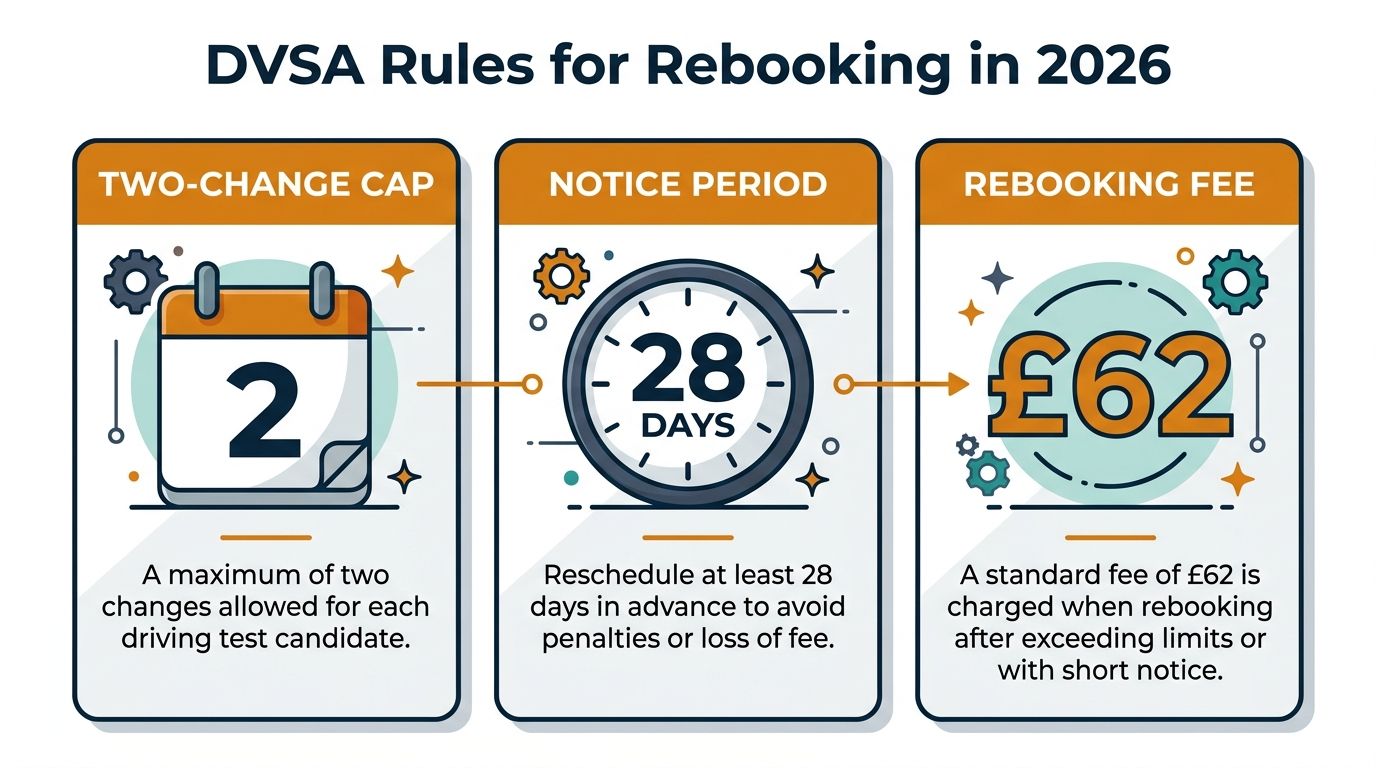
The booking horizon is also limited to 24 weeks, so the calendar may not show a useful alternative. Preserve your two changes, act before the notice deadline and choose a centre your instructor can support, rather than grabbing the first date displayed.

Why Your Test Centre Choice Matters More Than the Date
Refreshing the same busy centre over and over is usually the wrong strategy. A nearby centre with a shorter availability profile can be more valuable than a slightly earlier appointment at a difficult location, especially if your instructor can't support the date or you haven't practised the local roads.
DVSA's own figures show why a national headline can mislead. BBC reporting based on April 2026 figures put waits at 22.7 weeks in England, 22.9 weeks in Scotland and 17.3 weeks in Wales. The BBC report on regional driving-test waits shows that the same booking system can produce very different local conditions.
| Region | Average wait | Shortest reported wait | Example centres |
|---|---|---|---|
| England | 22.7 weeks | Not specified in the verified data | Compare several nearby English centres |
| Scotland | 22.9 weeks | Not specified in the verified data | Compare several nearby Scottish centres |
| Wales | 17.3 weeks | Not specified in the verified data | Compare several nearby Welsh centres |
The figures don't support inventing a typical London, Midlands or rural-centre wait, so judge the actual calendar in front of you. Search three realistic centres, then compare the date, drive time, road layout and your instructor's familiarity with each area. A slot that's technically sooner may be poor value if the journey is long or the test route is unfamiliar.
The DVSA test-centre guidance is a useful starting point for identifying alternatives. Put the centre first, then choose the earliest date you can prepare for properly.
Practical Ways to Find an Earlier Slot
Begin with the free method, but use it in an organised way. Sign in as the learner, open the test-availability search and check a sensible group of centres rather than repeatedly loading one location. Use the date-range controls to widen the search, then inspect the centre and time before deciding whether the appointment is suitable.
Manual checking works best when you've already agreed your acceptable limits with your instructor. Decide which centres you'll travel to, which days you can attend and how much preparation you need. That prevents a rushed click when an appointment appears.
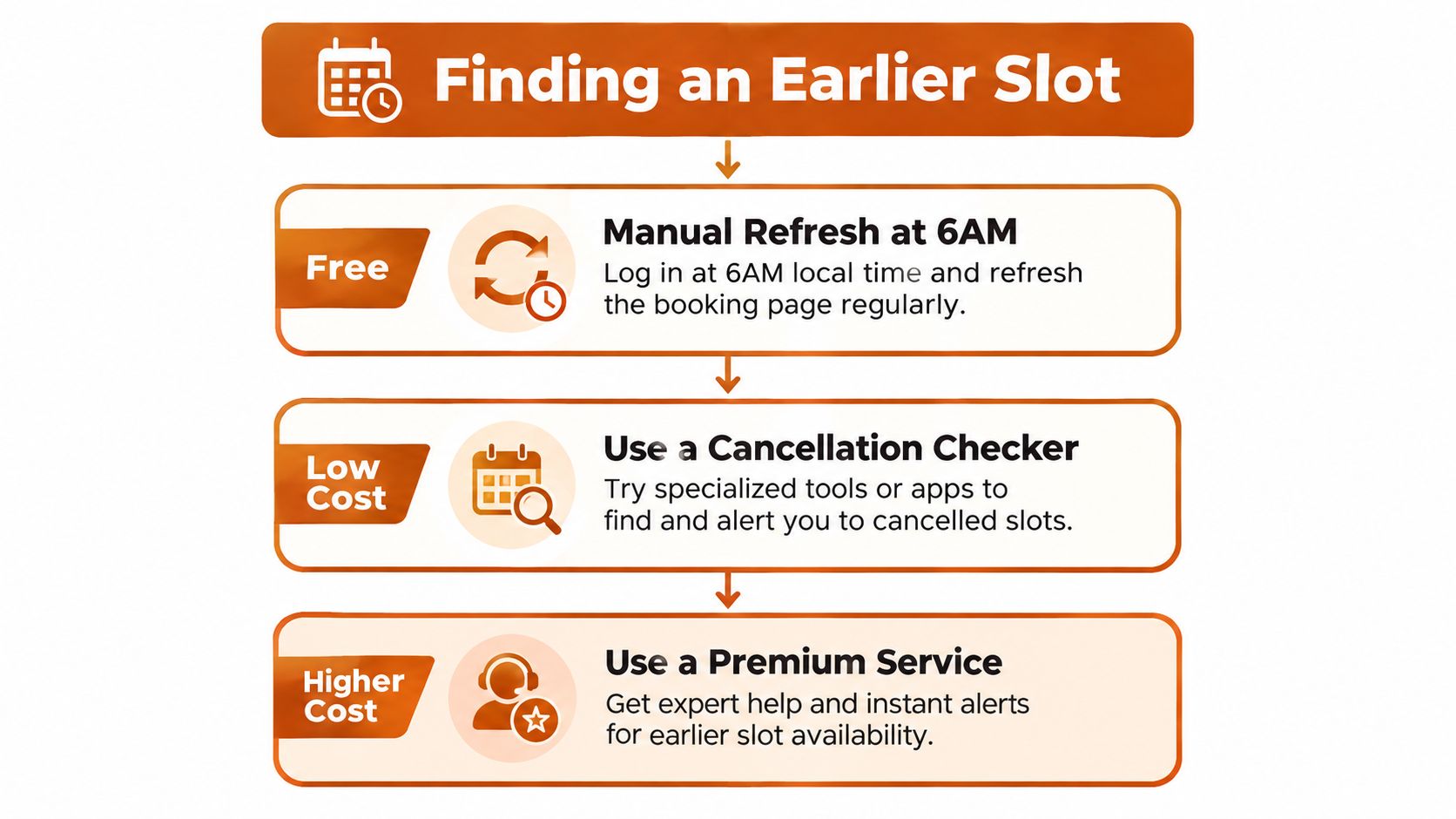
A monitoring service can sit between manual refreshing and doing nothing. Choose only a service that alerts you and leaves the actual booking, change or cancellation with you. DVSA's rules require the learner to manage the booking, and services that act as agents, bots or automated bookers can create account and compliance problems.
You can use a calendar or an appointment reminder system to track your current booking, instructor availability and any alert. A tool such as the Family Folder appointment tool can help organise reminders, but it doesn't replace checking the official GOV.UK details before accepting a change.
Here's a practical routine:
- Set your acceptable centres: Include the original centre plus nearby alternatives you can reach reliably.
- Set your acceptable dates: Reject anything that clashes with lessons, work, holidays or the required notice period.
- Check the official booking page: Confirm the slot is still available before making a change.
- Act when it fits: Suitable cancellations can disappear quickly, so don't wait for a perfect time that may not return.
- Keep a fallback: If an alternative centre offers a workable appointment, consider it instead of holding out for one postcode.
The cancellation-monitoring process should always end with you completing the transaction on GOV.UK. The notification can save checking time, but it doesn't remove your responsibility to choose and confirm the appointment.
Pitfalls That Cost Learners Time and Money
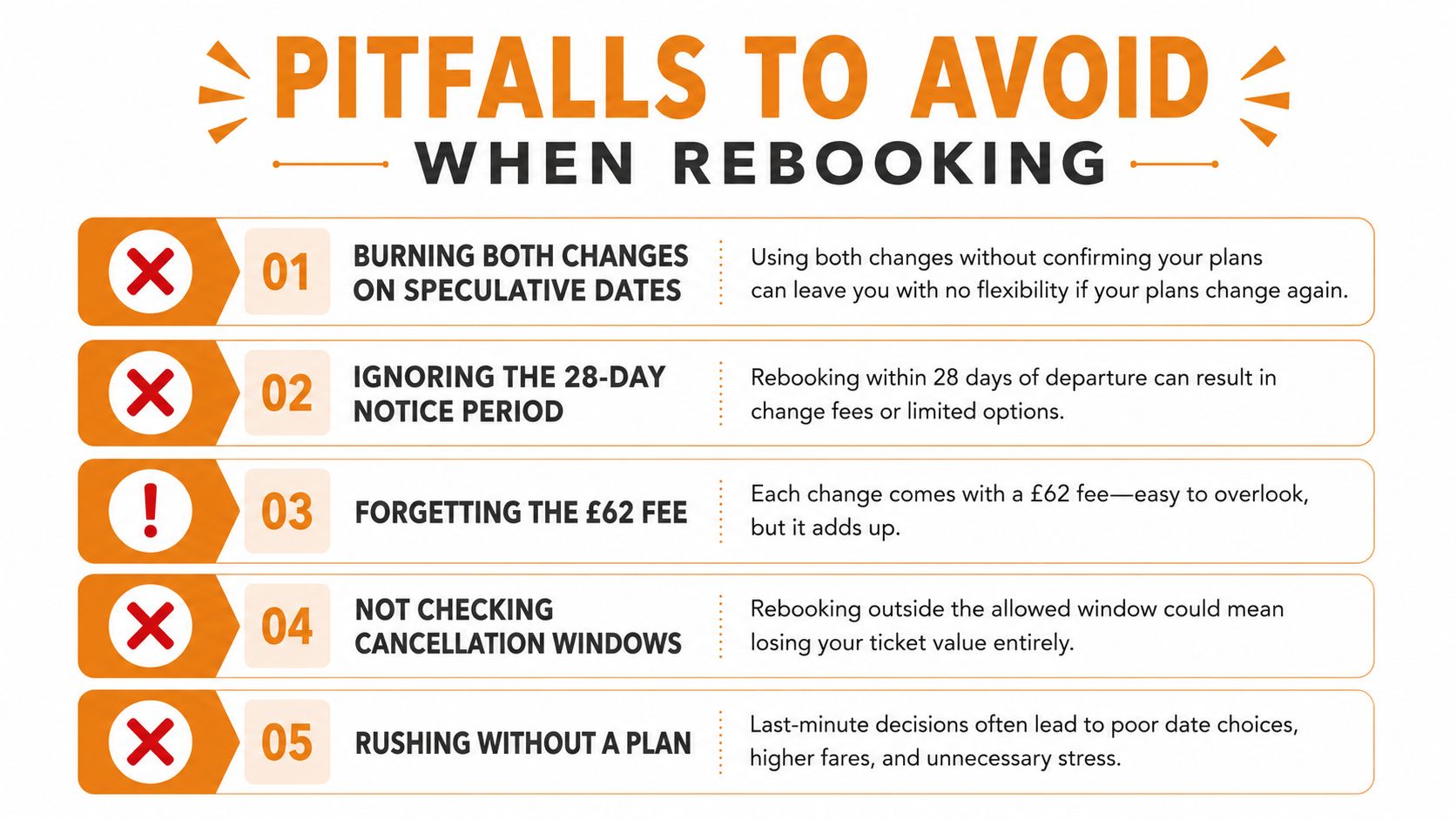
The biggest mistake is treating a change as reversible. A learner sees an earlier date, moves the booking, then discovers that the instructor is away or the test centre is too far to practise properly. If that move uses one of the two permitted changes, the learner has spent flexibility on a speculative decision.
A cancellation is not a planning tool. Decide your acceptable centre and date before you search.
The notice rule causes a second expensive mistake. Suppose your test is on Friday and you try to move it on the Monday of that same week. That isn't 10 full working days' notice, so the fee can be forfeited. Being ill, busy or unable to find a replacement date doesn't turn a late change into a free one.
No-shows create another avoidable problem. BBC reporting in June 2026 said tighter booking rules followed thousands of no-shows, while Wheels Within Wales reported that more than 60,000 tests were cancelled because of examiner medical absences in 2025/26, accounting for 59% of all cancellations. Those figures describe wider cancellation pressure, not a permission to miss your own appointment. If you can't attend, act within the permitted window and keep evidence where relevant.
Check the less obvious risks
- Speculative changes: Don't use both moves to test dates that might work.
- Late cancellation: Count full working days before assuming you can change without losing the fee.
- Unplanned holidays: Check your instructor's diary before accepting an earlier slot.
- Repeated centre changes: Don't keep cancelling and recreating bookings without a clear reason.
- Theory timing: Check that your theory pass remains valid for the practical date. The GOV.UK booking guidance should be your reference for current eligibility.
The safest approach is boring and effective. Keep one workable appointment, change it only for a better confirmed option and make sure your lessons can support the new date.
A Quick Pre-Rebook Checklist Before You Click Confirm
Run this check while the booking page is still open. It takes less time than fixing a poor decision later.
- Identity details: Have your driving licence number, booking reference and theory pass information ready.
- Centre choice: Can you reach the centre reliably, and can your instructor prepare you for its roads?
- Date suitability: Does the appointment leave at least 10 full working days for a protected change or cancellation?
- Change count: How many changes have you already used? Remember that date, time, centre and swap changes can count.
- Instructor availability: Has your instructor confirmed the new day and time before you click confirm?
- Test-day plan: Do you have access to a suitable car, insurance arrangements and enough practice beforehand?
- Confirmation: Will the new email arrive at an address you check, and can you save the appointment letter?
Don't confuse “earlier” with “ready”. The right rebooking is the earliest appointment at a centre you can reach, with an instructor who can prepare you and enough time to arrive confident. If the slot fails any of those checks, keep the current booking and continue monitoring.
Driving Test Cancellations monitors DVSA availability and sends alerts when earlier appointments appear, while you still complete the rebooking directly through GOV.UK. If you've got a long wait or need to watch several suitable centres, visit Driving Test Cancellations and set up your search around the locations and dates you can use.