You've passed your theory test, your instructor says your driving is coming together, and you're ready to look for a practical test. Then the official booking service offers a date months away, while the centre you want appears to have nothing available. There's no normal waiting list to join and no official cancellation list that will place you in a queue, so you're left checking the system yourself.
That's why learning how to book a driving test now involves more than entering your details and choosing a date. You need to understand the difference between national and local waiting times, decide how much flexibility you have over test centres, and protect the appointment once you've secured it. The latest guidance on driving test waiting times gives useful context, but the practical decisions still sit with you.
Table of Contents
- Introduction to Booking Your Driving Test Today
- What You Need Before You Book Your Practical Test
- How to Book Through the Official DVSA System
- Choosing the Right Test Centre and Timing
- Managing Changes Cancellations and the New 2026 Rules
- Final Checks Before You Confirm and What to Do Next
Introduction to Booking Your Driving Test Today
The scale of the backlog explains why a straightforward booking can feel so difficult. The National Audit Office reported an average waiting time of 22 weeks in Great Britain in September 2025, compared with just over five weeks in February 2020. It also reported that the DVSA was still working towards a seven-week target, but didn't expect to meet it until November 2027. (National Audit Office)
That doesn't mean every learner waits exactly 22 weeks. The official figure is a national measure, and local centres can be much faster or slower. Government guidance also confirms that most test centres don't operate a waiting list or cancellation list, so you must search for appointments and earlier dates yourself rather than registering and waiting for an offer.
A sensible booking strategy has two stages. First, secure a valid appointment that you can realistically attend. Second, monitor the official system for an earlier date, but only make a change when you're confident it suits your preparation, travel arrangements and instructor's availability.
The rules have also tightened. From 12 May 2026, only the learner can book or manage their own car practical test, although another person can help them complete the process. From 31 March 2026, a learner can change a car test only twice, and from 9 June 2026, moving a booked test is restricted to nearby centres. (DVSA booking rule update)
Those changes make the order of your decisions matter. Booking the earliest date without checking your diary can leave you with a difficult amendment later. Holding out for one perfect centre, meanwhile, can leave you with no appointment at all.
What You Need Before You Book Your Practical Test
Before opening the GOV.UK service, get the information and decisions that can prevent a failed booking attempt. You'll need a valid provisional driving licence, your theory test pass details, a working email address and a payment method ready for the test fee. The booking service uses your licence and theory information to identify you, and the email address is needed for confirmation and important updates.
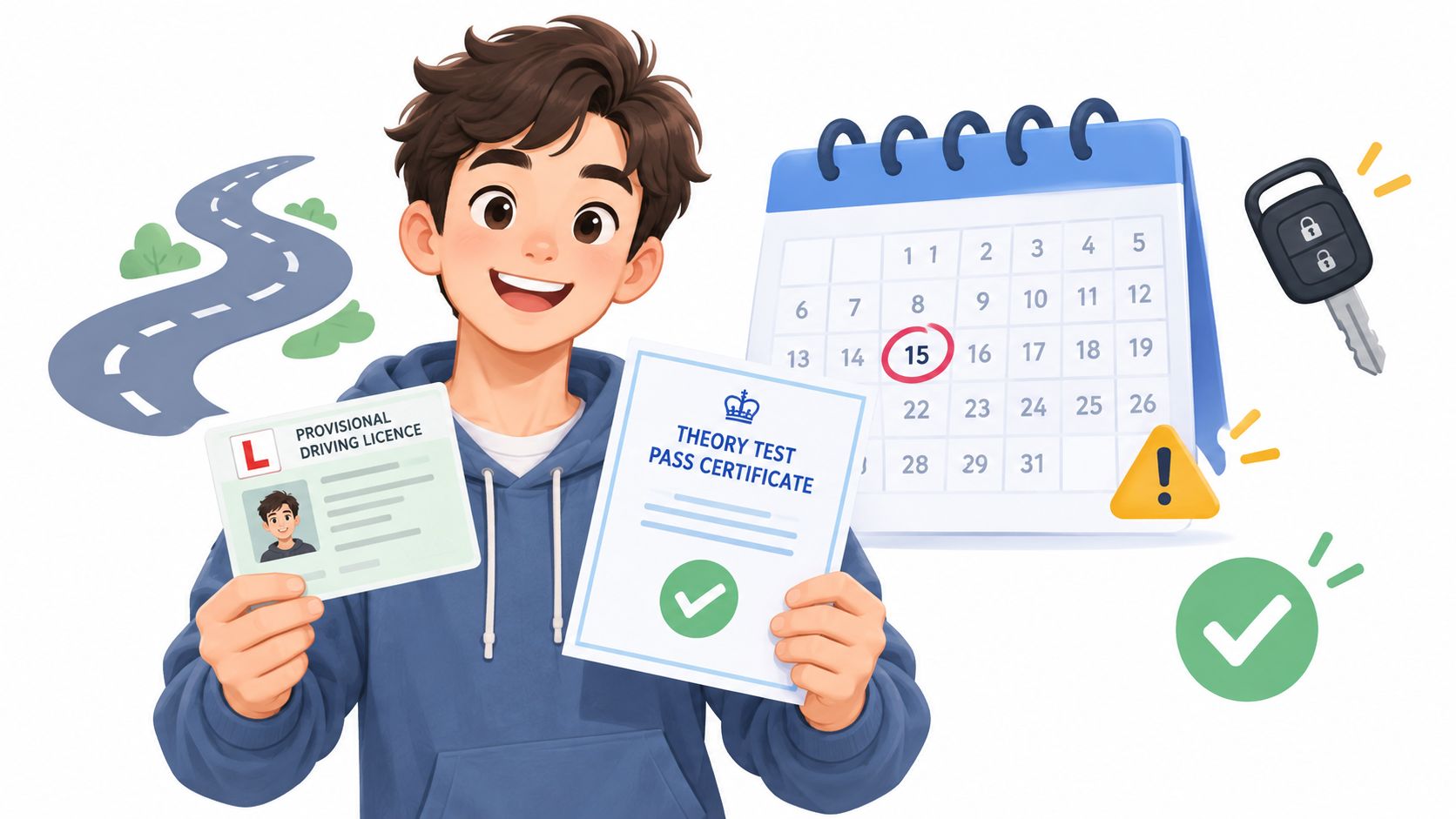
Check your personal details before searching. Your name, licence information and contact details should match the records used by the booking service. Have your driving instructor's availability in front of you as well. A date that looks convenient at the centre may be impossible if your instructor can't provide the car or a suitable lesson beforehand.
Eligibility isn't the same as readiness. The most recent DVSA-based Great Britain car practical pass rate was 50.0% in 2025/26, following 48.7% in 2024/25. In practical terms, roughly one candidate in two still fails after obtaining a test appointment. (DVSA-based pass-rate data)
Before you book, ask yourself whether you can consistently:
- Drive independently: Follow signs and make safe decisions without regular prompts.
- Complete manoeuvres reliably: Your manoeuvres should be controlled and repeatable, not successful only on a good lesson.
- Manage normal faults: A minor mistake shouldn't cause you to lose concentration or create a serious safety issue.
- Handle the likely test area: You should have practised the roads, junctions and speed limits around your chosen centre.
Practical rule: Book when your instructor believes you're close to test standard, not simply because a date has appeared.
Booking too early can be expensive in ways that aren't obvious. A long wait may mean extra lessons while you prepare, and an avoidable failure uses a scarce appointment that could have gone to a learner who was ready. If your driving is still inconsistent, more training before booking is often the better decision.
For a visual overview of the preparation and booking process, this video may help:
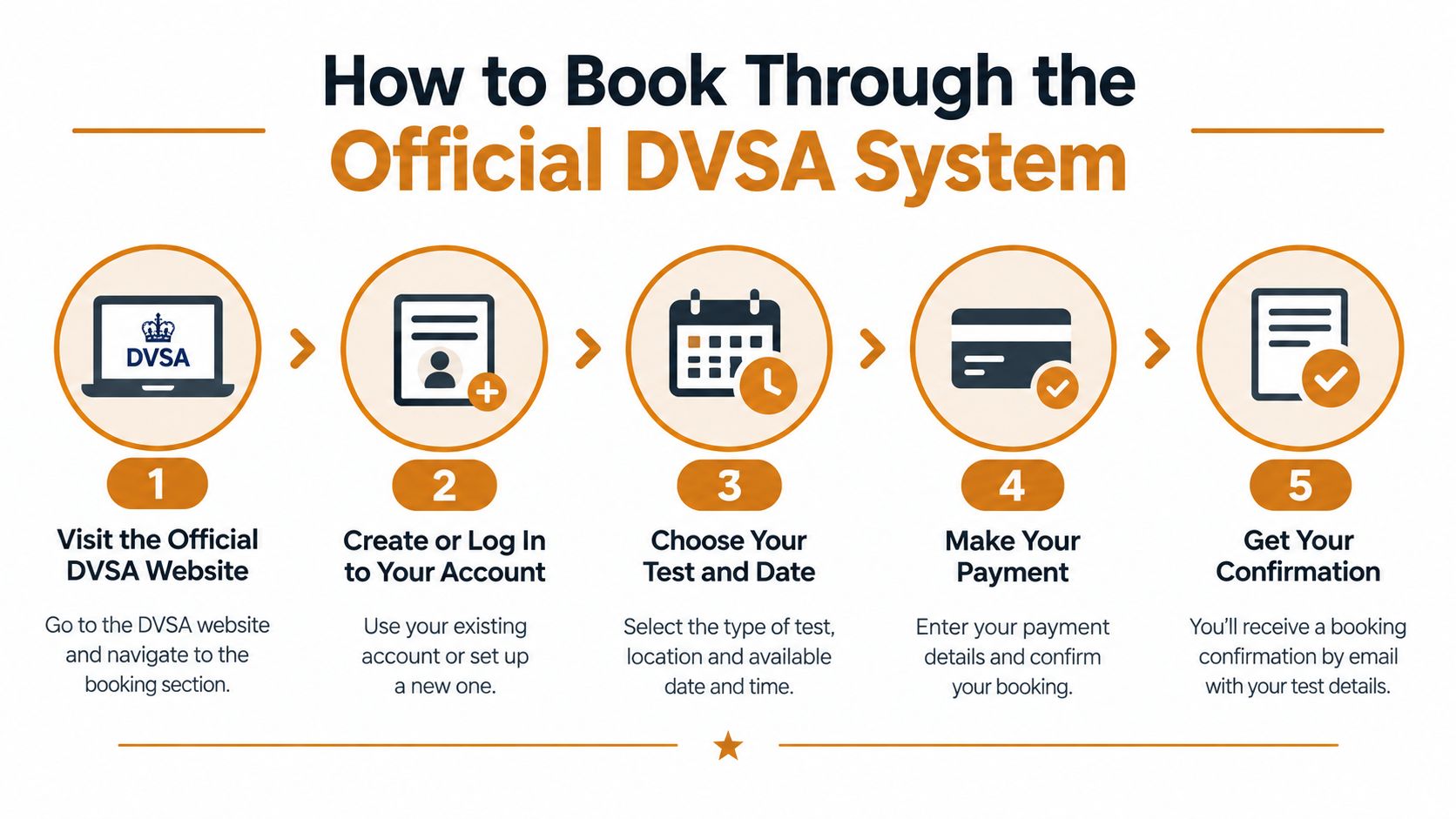
How to Book Through the Official DVSA System
Use the GOV.UK driving test booking service, rather than a site that claims it can obtain or manage a test for you. From 12 May 2026, the learner must make and manage the booking themselves, although an instructor, parent or another supporter can sit with them and help.
Start by entering your driving licence and theory test information. Take care over each character. An incorrect detail can stop the service from finding your record or force you to abandon the search and start again. Keep your email address accessible because the DVSA uses it to send booking information.
The centre search is where you'll make the most consequential choice. You can search your preferred centre, but don't assume it's sensible to wait for that one location if another centre is reachable and has a suitable appointment. Consider the extra travel time, whether your instructor covers that area, and whether you can practise there before the test.
Appointments are released in batches, and availability can change quickly when tests are added or cancellations occur. The GOV.UK guidance on finding earlier driving test appointments advises candidates to search directly through the official booking system. Refreshing endlessly isn't a booking strategy, but checking at sensible intervals can reveal options that weren't visible earlier.
A practical approach is to accept the first compliant slot that you can attend, then look for an earlier appointment later. “Compliant” means the date works with your instructor, your preparation and your other commitments. It doesn't have to be your ideal date.
For extra background on the booking process itself, you can also schedule your road test online and compare the general workflow with the UK DVSA system. The official booking service remains the place where a UK learner must confirm the appointment.
Before paying, check the centre, date, time and your contact details. Read the confirmation carefully after payment and save the booking reference. You'll need the reference if you later manage the appointment or contact DVSA about it.
Choosing the Right Test Centre and Timing
Your test centre can matter more than the national waiting figure. Centre-level data shows why. At Darlington in May 2026, the centre metric was 13 weeks, while the median waiting time was 6.7 weeks. These measures describe different things, so check the centre information alongside the dates available in the official booking service. (DVSA centre waiting-time data)
DVSA reported a Great Britain median wait of 11.1 weeks in August 2026, while availability stood at 20.7 weeks at the end of July 2026. The median describes the time between booking and taking a test. Availability shows the wider gap before an appointment can be found in the system. Both figures help with planning, but neither guarantees the wait at your chosen centre. (GOV.UK driving-test data)
| Measure | Wait time | What it means for booking |
|---|---|---|
| Great Britain median, August 2026 | 11.1 weeks | A national reference, not a promise for your centre |
| Great Britain availability, end of July 2026 | 20.7 weeks | Explains why learners search for earlier openings |
| Darlington centre metric, May 2026 | 13 weeks | The centre figure may be much longer than the local median |
| Darlington median, May 2026 | 6.7 weeks | Local outcomes can differ from the headline centre figure |
Regional variation affects the choice too. BBC-reported DVSA figures for April 2026 put average waits at 22.7 weeks in England, 22.9 weeks in Scotland and 17.3 weeks in Wales. Individual centres can be slower, with Crieff, Bedford, Callander, Campbeltown and Arbroath reported at roughly 26 to 31 weeks in one 2026 dataset. (BBC reporting on regional waits)
A distant centre is not automatically a better option. The journey can reduce practice time, complicate use of your instructor's car and make a later change harder. Compare the likely test date with travel time, lesson costs and the roads you have practised. Choose a centre where you can prepare properly.
Book in two stages. First, secure any compliant slot you can attend. Then protect it while you monitor for a realistic earlier opening. Before searching, read guidance on the best time for driving test availability, but treat timing patterns as guidance rather than a guarantee. The 2026 change limits mean an unsuitable centre or date can be costly to alter.
Cancellations are particularly useful in areas with long delays. DVSA figures show that 101,423 car driving tests were cancelled in 2025/26, compared with 120,710 the previous year, with examiner medical absences identified as a major factor. Use the cancellation search only when the earlier appointment still works for your preparation, travel and booking restrictions.
Managing Changes Cancellations and the New 2026 Rules
Once you have a workable appointment, protect it carefully. From 12 May 2026, only the learner taking the test can book or manage it. Another person may help explain the screen or options, but cannot control the booking. Unofficial services that manage tests or cancellations for learners do not fit the new arrangement. Learners who need extra support can contact the DVSA customer service centre. (DVSA learner-control guidance)
The change limit also affects how you search. From 31 March 2026, a car test can be changed only twice. From 9 June 2026, a location change is limited to nearby centres. Booking a distant centre on the assumption that you can later move it back locally can leave you with fewer usable choices.
You must give at least 10 full working days' notice to change or cancel a car practical test without paying again. Monday to Saturday count, while Sundays and public holidays do not. Miss the deadline and you lose the fee, then need to book and pay for another test. Check the current GOV.UK guidance on changing or cancelling a driving test before acting.
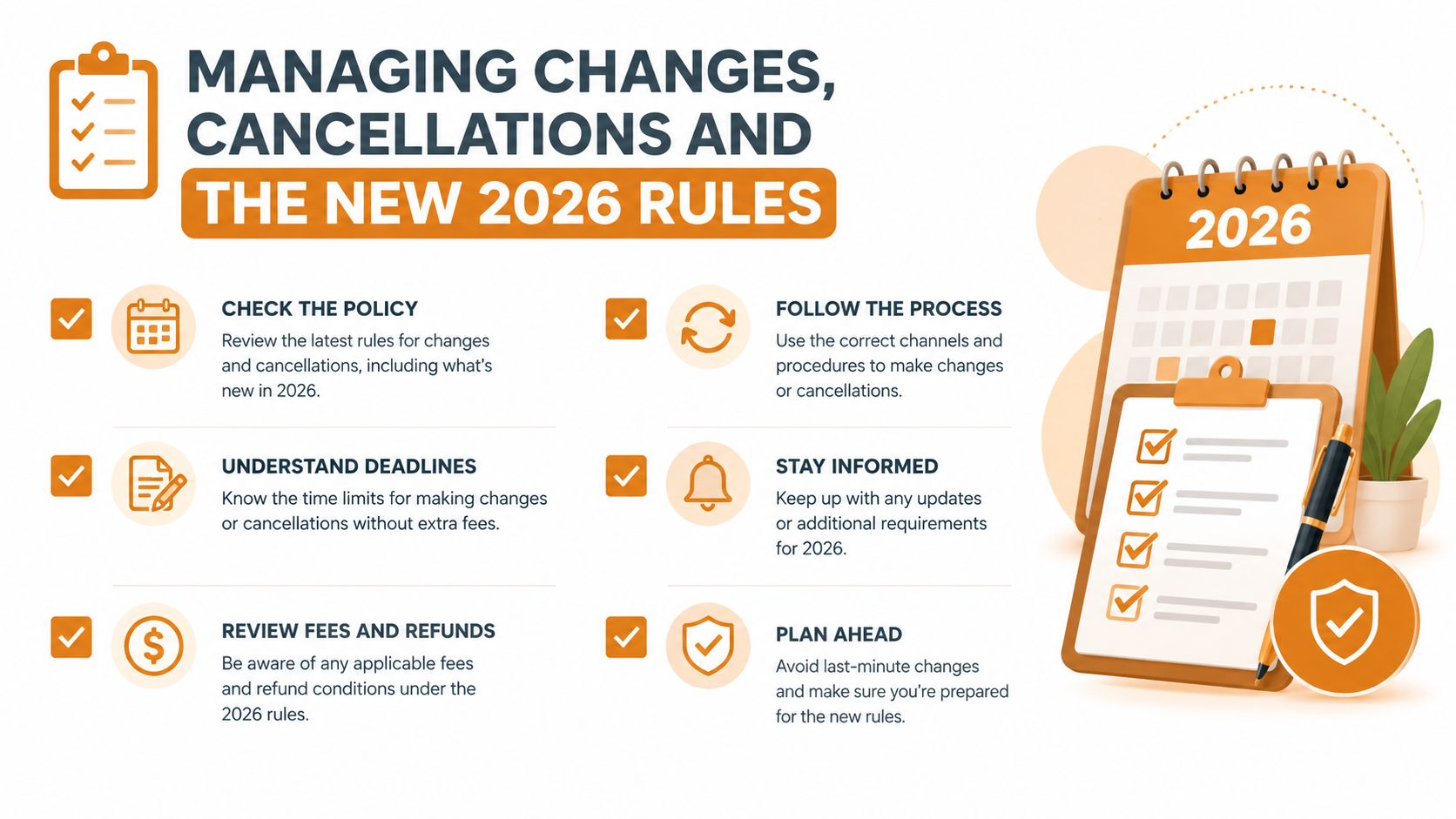
Treat each amendment as a decision. Check that the replacement centre is within the permitted area, your instructor can attend, you can practise on suitable roads, and the date avoids work, college or childcare conflicts. Record your change count, booking reference and final appointment. The system gives you limited opportunities, so memory is not a reliable record.
If your circumstances shift, calculate the working-day notice before cancelling. A weekend or bank holiday may shorten the practical notice period. The booking and cancellation process explained here shows how earlier-slot monitoring can fit around the requirement to complete every change yourself through DVSA.
Use alerts or manual searches only for appointments you could take. Driving Test Cancellations monitors DVSA availability and sends time-stamped alerts, but you still complete the rebooking through the official DVSA website. Keep your existing date until a replacement is clearly better for preparation, travel and instructor availability.
Final Checks Before You Confirm and What to Do Next
Before confirming, make one clear decision. If you're close to test standard, your instructor can provide the car, and the date works with your diary, secure the appointment even if it isn't perfect. If you still need regular prompts, struggle with independent driving or haven't practised the chosen area, waiting may be cheaper than booking a test you're unlikely to pass.
After confirmation, save the reference and check the centre immediately. Keep the booking while you search for an earlier appointment through the official DVSA system. Don't change because a slot is earlier. The replacement must also work for your preparation, instructor and travel arrangements, and it must fit within the permitted change rules.
The booking process is now best treated as a controlled sequence. Secure first, monitor second, amend sparingly. That approach gives you a place while preserving the limited flexibility you may need later.
Driving Test Cancellations monitors DVSA availability and sends time-stamped alerts for earlier appointments, while you rebook directly through the official DVSA website. If you already have a test and want to monitor suitable centres, visit Driving Test Cancellations to see how the notification service works.