£62 is the standard weekday car practical driving test fee in Great Britain, and the theory test is £23. If you take the practical test in the evening, at the weekend, or on a bank holiday, the fee rises to £75.
That's the short answer, but it's not the complete picture. The test fee is only the starting point, and for most learners the bigger bill comes from waiting, extra lessons, and retakes.
Table of Contents
- The Headline Cost of Taking a Driving Test in the UK
- Practical Test Fees by Day and Time
- Theory Test Fees and What Your Money Covers
- Regional Waiting Times and Why They Add to the Bill
- How to Pay and When You Can Get a Refund
- What Pushes Your Total Bill Beyond the DVSA Fee
- Smart Trade-Offs and Common Misconceptions
The Headline Cost of Taking a Driving Test in the UK
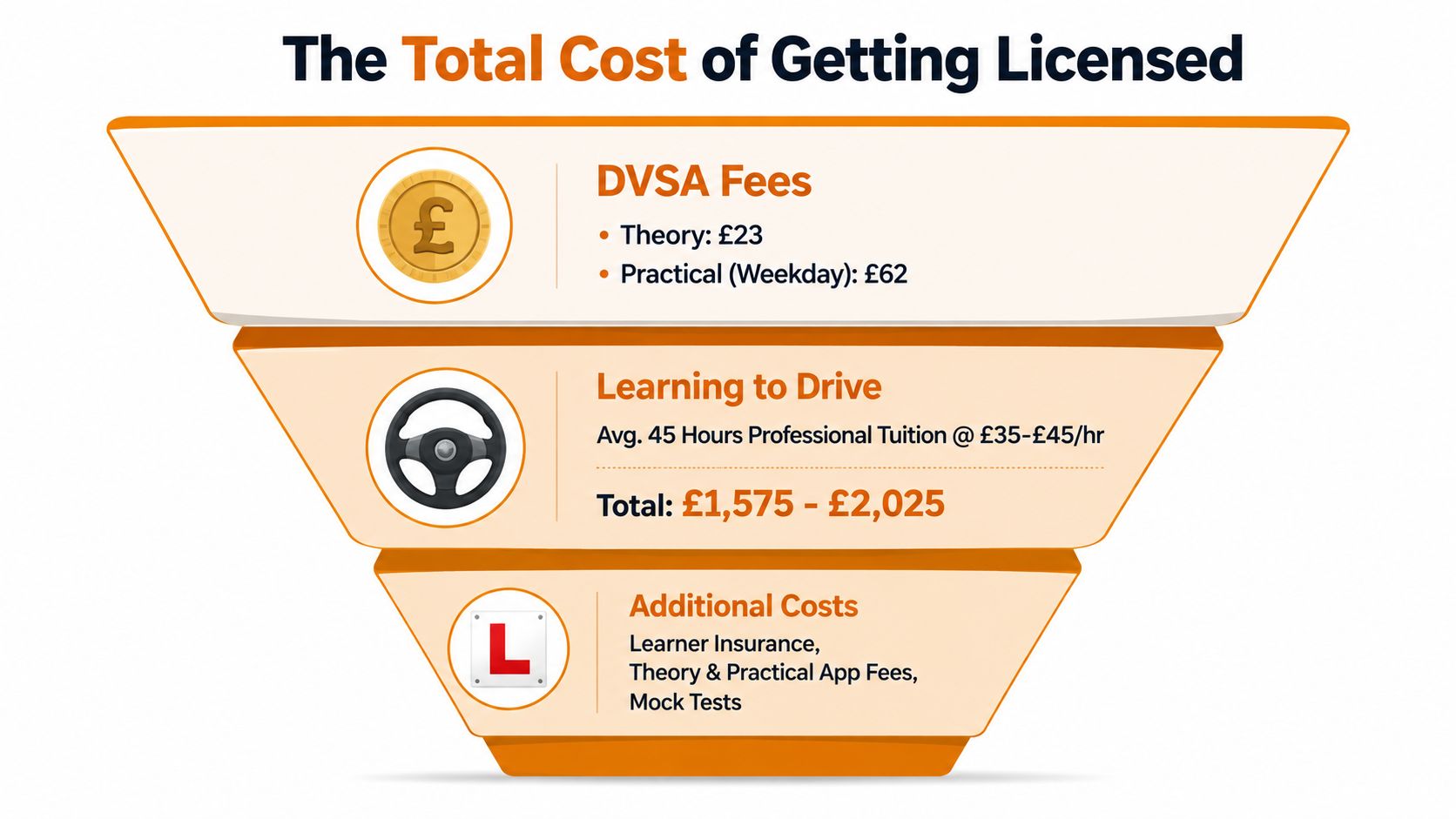
The current official price on GOV.UK for a standard car practical test is £62 on weekdays and £75 for evenings, weekends and bank holidays, while the car theory test costs £23 (GOV.UK driving test cost). Put together, that gives you a £85 weekday baseline before you've paid for any lesson time, car hire, or a second attempt.
That is the figure people should start with when they ask how much is the driving test. It answers the narrow question, not the painful one. The narrow question is the fee at booking. The painful one is what happens when you miss the first date, need more practice, or end up paying more to move the test forward.
Practical rule: treat the DVSA fee as the entry ticket, not the full price of getting licensed.
The official price matters because it is fixed, simple, and easy to compare. But it also misleads learners into thinking the cost of passing is mostly about the test day itself. In reality, the test fee is a small line in a much larger budget, and the waiting list is often the part that drains money fastest.
A sensible learner should budget around three things. First, the booking fee. Second, the time spent keeping skills sharp while waiting. Third, the cost of a failed attempt, because a retake means paying again and often taking more lessons before the next slot.
Practical Test Fees by Day and Time
The car practical test is priced in two clear bands, and there's no dynamic pricing nonsense here. A weekday test costs £62, while an evening, weekend or bank holiday slot costs £75 (GOV.UK driving test cost). That is a straight £13 premium for taking the less convenient slot.
Why the time of day matters
The fee structure is fixed, so the same category of car test costs the same whether you book far ahead or grab a later date. If you can take a Tuesday morning instead of a Saturday afternoon, you save money on the fee itself and often keep the rest of the bill lower too. In practice, weekday slots can be easier on your wallet because instructors often charge less for standard weekday availability than for awkward out-of-hours work.
The £75 rate also applies to bank holidays, which includes public holiday dates such as Christmas Day, Boxing Day and New Year's Day. None of that changes the standard required pass mark. The examiner still checks the same driving standard, and the road doesn't get any softer because the appointment is on a holiday.
A cheap slot is only cheap if you're ready for it.
| Slot Type | Fee | Notes |
|---|---|---|
| Weekday | £62 | Standard price for a car practical test |
| Evening, weekend or bank holiday | £75 | Includes a £13 premium over the weekday fee |
This is also only the standard category B car practical test. Lorry, bus and tractor tests sit in separate fee tables on GOV.UK, so don't assume the car price applies to every licence category.
Theory Test Fees and What Your Money Covers
The car theory test costs £23 and that fee covers the official booking, the test-centre process, and the result you get on the day (GOV.UK driving test cost). For most first-time drivers, it's a requirement because you have to pass the theory test before booking the practical.
What happens at the test centre
You'll show your ID, sit the timed multiple-choice questions, then move into the hazard perception part where each clip can score up to five. The result is issued before you leave, so you're not waiting around for a letter or email. That same £23 is what you pay again if your certificate expires after two years and you have to retake it.
The official route is the GOV.UK theory test booking service, and that's the only channel worth using. If someone is trying to sell you a shortcut, they're selling convenience, not legitimacy.
For readers who want a separate step-by-step breakdown of the process, this theory test guide is the relevant place to start.
The key point is simple. The theory test fee is small, but it's part of the chain leading to the practical test. If you fail the theory stage or let it lapse, the clock resets and so does the cost.
Regional Waiting Times and Why They Add to the Bill
A cheap test fee can still leave you paying more overall. The National Audit Office said the average wait for a practical car test in Great Britain was 22 weeks in September 2025, up from just over five weeks in early 2020, and that 70% of DVSA test centres were at the 24-week maximum (NAO press release).
Why Waiting Drives Up the Bill
Delay costs money because driving skills fade. Learners end up booking refresher lessons, and that is where the bill starts climbing. Some also pay third-party sites up to £500 to chase earlier appointments instead of waiting for a standard slot.
The regional picture is uneven. Coverage in 2026 put national average waits at 22.3 weeks, with Scotland at 22.9 weeks and Wales at 17.3 weeks, while some London and South East centres were still above 25 weeks (2026 waiting-time coverage). That is why one learner's total cost can look very different from another's before the test day even arrives.
| Region | Average Wait (weeks) | Extra Lessons Needed | Effective Cost Premium (£) |
|---|---|---|---|
| England | Long, often stretched | Usually more refresher time | Higher where waits drag on |
| Scotland | 22.9 | More refresher time in many areas | Higher in busy centres |
| Wales | 17.3 | Often less than the busiest regions | Still significant where slots are tight |
Check the latest centre-by-centre data on our driving test waiting times guide if you want a clearer view of where the delays are worst. If you have flexibility, a quieter centre outside your immediate area can cut the wait and save you another round of lessons.
The fee on GOV.UK is only the entry ticket. The waiting list is where the extra money goes.
How to Pay and When You Can Get a Refund
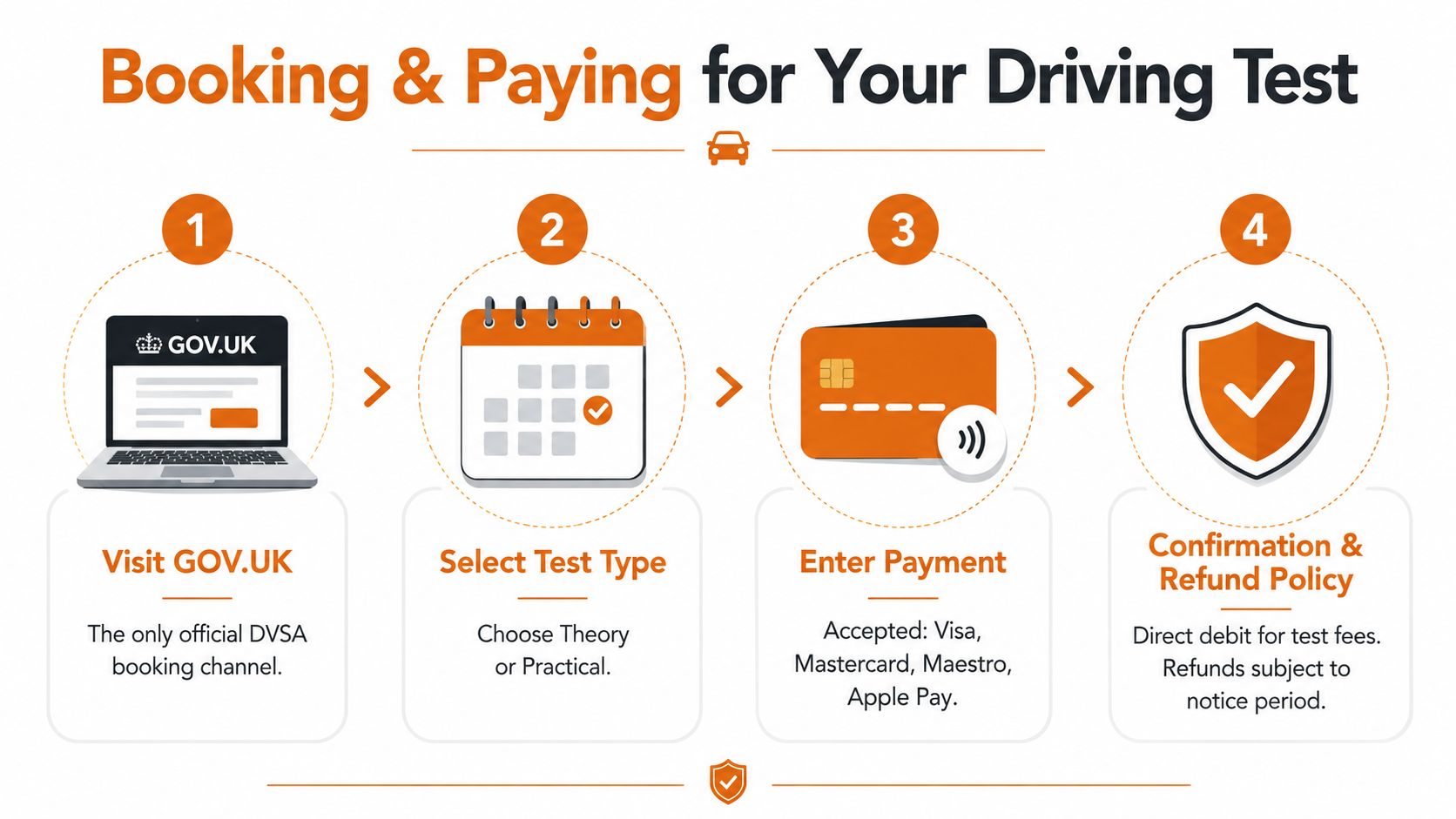
Booking your theory or practical test should happen through GOV.UK, full stop. That's where the official DVSA system sits, and that's where you pay the test fee directly. The accepted payment methods include Visa, Mastercard, Maestro, Apple Pay and Google Pay, and prepaid cards are treated according to the card provider's rules at payment time.
Refunds and cancellations
The refund rule is straightforward. If you cancel at least three clear working days before the test, you can get a full refund. Shorter notice usually means only a partial refund, and if you don't turn up, you get nothing back.
That makes the timing of cancellation a real money issue, not just an admin task. A learner who cancels 10 days before the appointment is safely inside the full-refund window, while a no-show throws the whole fee away. The same logic applies if your plans change and you need to move the booking, because a badly timed change can turn into a wasted fee and a longer wait.
Keep a screenshot of the booking confirmation and check your spam folder for the appointment email. That tiny habit saves arguments later, especially if you need to prove the booking details or track the refund process.
What Pushes Your Total Bill Beyond the DVSA Fee
One failed attempt can cost more than the test fee itself. A learner who books too early, then needs more lessons and a new slot, ends up paying for the same mistake twice.
What pushes the bill up
Take a learner in Wales who is stuck behind a long wait and needs eight more lessons while the date drifts further out. The official DVSA fee stays fixed, but the total bill keeps climbing because every extra hour on the road costs money, and the delay can force a retake if confidence drops before test day.
That is why the hidden cost sits in the gap between booking and passing. Tuition is usually the biggest drain, followed by revision tools, provisional licence costs, learner insurance, and the bill for another test if the first one goes wrong. A learner who only focuses on the fee is ignoring the expensive part of the process.
If your school uses test prep center software, it can help instructors keep bookings and learner progress in order, but it does nothing to reduce the learner's own lesson bill.
The smarter budget is the one that assumes delay, not luck. A rushed booking can turn into a waste if you are not ready, while a sensible wait with a few more lessons often costs less than failing and starting again. For a clearer look at test pricing and cancellation rules, check the driving test pricing guide.
The blunt truth is simple. Pay once for proper preparation, or pay twice for a bad gamble.
Smart Trade-Offs and Common Misconceptions
The cheapest test slot is not always the smartest one. A weekday appointment looks like the obvious bargain, but if it lands before you're ready, you'll burn cash on a failed attempt and probably pay for more lessons before the next date. That is a false saving, and it's one I see learners make all the time.
Not every centre is equal
Rural centres can sometimes give you a better shot at an earlier booking, but the travel costs and time off work can erase the gain. Urban centres may be closer, yet parking hassles, congestion and getting there on time can add pressure you don't need on test day. The centre matters as much as the fee.
The other common mistake is booking the soonest date just because it exists. Readiness beats speed. A test that's too early can cost another £62 or £75, plus the lessons needed to fix what went wrong the first time.
Pay for readiness, not optimism.
If work or childcare means you can only do a certain slot, an out-of-hours test may still be the right call even at £75. Paying a bit more for timing that fits your life can be cheaper than losing a work shift or delaying the test for months. A well-run cancellation search can also make sense for people who need speed, but the win is getting a date you can use.
The smartest approach is to weigh fee, wait time and readiness together. Once you do that, the answer to how much is the driving test becomes much clearer, and usually more expensive than the sticker on GOV.UK.
If you want earlier practical test dates without spending your evenings refreshing GOV.UK, Driving Test Cancellations can help you track live availability and spot cancellations fast. It's a sensible option if your test is stuck in the backlog and you want to avoid drifting into more lesson costs while you wait.