You've passed your theory test, the phone's in your hand, and now you're trying to work out how do you book your driving test without getting stuck in GOV.UK queues or losing the slot before you've even paid. That's a common place to be, especially when the waiting time looks long and every learner seems to know a different shortcut. The good news is the official system is straightforward once you know what it's asking for, and the frustrating bits make more sense when you understand how the booking market works.
Table of Contents
- What You Need Before You Start
- The Online Booking Process Explained
- Choosing Your Test Centre and Date Realistically
- New Booking Rules for 2026 You Should Know
- Getting an Earlier Test Date
- Common Booking Mistakes to Avoid
- Where to Go From Here
What You Need Before You Start
If you've just passed your theory test, the next step is simple enough, but you need the right details ready before you start clicking around. The DVSA booking system will only let you book a practical test once your theory test has been passed, so that's the first hard gate to clear on GOV.UK the official booking flow on GOV.UK.
Get these details in front of you first
Your Great Britain provisional driving licence number is the main one. Make sure the name and address on your licence are correct too, because mismatches can trip up a booking and waste time when you're trying to secure a slot.
You'll also need your theory test pass details to hand. If you're still waiting to pass theory, there's no point going into the practical booking service yet, because the system won't let you complete the booking.
Practical rule: check the spelling on your licence before you start, not after you've chosen a date. It's much easier to fix a detail on paper than to lose a slot while you're hunting for a document.
Have a payment method ready as well, so you're not scrambling once you've found a date that suits you. If you want a quick refresher on the theory side before you book, this theory test guide is worth keeping open in another tab.
The Online Booking Process Explained
A learner who has the right details in front of them can move through the DVSA booking screen quite quickly, but the live system still feels like a race when demand is high. The safest place to begin is the official GOV.UK service, because that is where practical test appointments are managed and where you can see the slots as they appear GOV.UK driving test booking service.
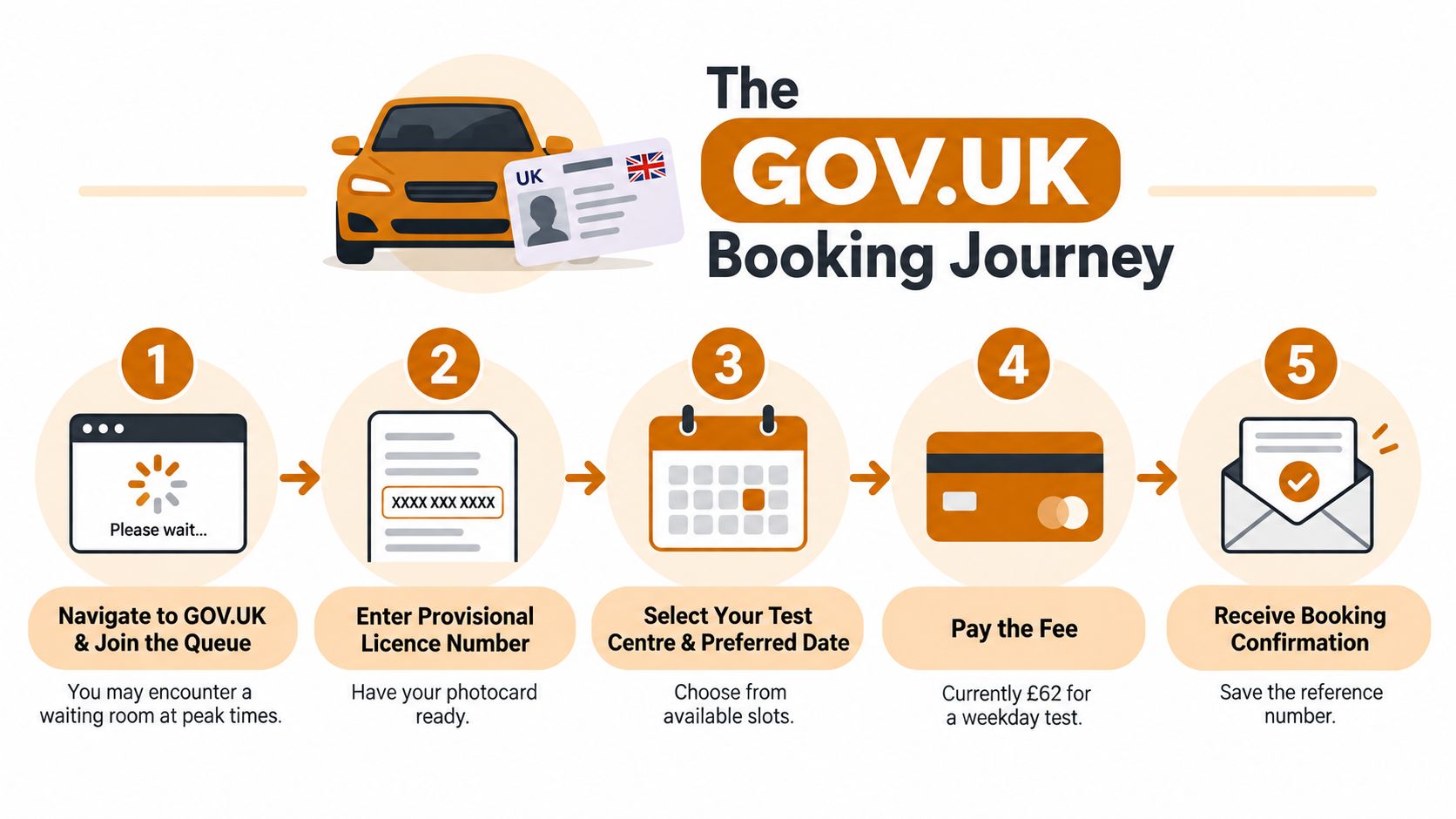
The first screen often sends you to a queue page if a lot of people are trying to book at once. That can feel like waiting at a busy checkout, but it is only the system controlling traffic. Once you are through, it asks for your provisional licence number and your theory test pass details, then checks that you can continue.
From there, you choose a test centre and a date from whatever appointments are visible at that moment. That part can feel tight because the screen is live, not fixed. If you pick a slot and accept the timing warning, you normally have 15 minutes to complete the booking before the slot may be released again BBC reporting on the booking window.
After that, you pay and wait for confirmation. Save the reference number straight away, because it is the record you will need if anything looks wrong later. For learners who are used to fixed diary systems, the DVSA setup can help make sense of why compare calendar-based scheduling tools behave differently from a live release system.
What catches first-time bookers out
The timing warning is the bit that usually trips people up. A learner thinks the slot is theirs, spends too long checking details or hesitating over payment, and then loses it. The system does not hold a booking open for long.
Another common mistake is using unofficial services that look faster or easier. The practical test booking should go through GOV.UK, because that is the service the DVSA uses to manage appointments. With the live release pattern, it helps to book with a clear plan rather than click through in a hurry.
Choosing Your Test Centre and Date Realistically
A lot of learners grab the first date they see, then realise too late that it clashes with lessons, work, or the test centre they know best. That's understandable, but it can backfire. The safer approach is to treat the booking screen as a choice, not just a race.
Published availability and real waiting times are not the same thing
The DVSA's headline waiting-time figure is often misunderstood. It is not the average wait for everyone. The guidance says it is the number of weeks until at least 10% of weekly appointments are still available at a centre, while the median wait for people who took a car test in July 2026 was 11.1 weeks GOV.UK guidance on appointments release dates and earlier tests.
That gap matters because the experience varies sharply by region. Reporting on DVSA figures for April 2026 said average waits were 22.7 weeks in England, 22.9 weeks in Scotland, and 17.3 weeks in Wales regional DVSA wait figures. In practice, that means you should not assume the first centre you see is the best one.
A slightly less convenient centre can be the difference between waiting ages and getting a date that fits your life.
If you have access to several centres within reach, compare them before you confirm anything. A later test at your local centre may still be the smarter choice if it means practising on roads you already know, but a sooner date elsewhere can make sense if you are ready and your instructor can get you there.
For learners who want to compare centre options more systematically, the test centres page is a useful place to look at availability patterns rather than just guessing.
New Booking Rules for 2026 You Should Know
The booking system changed in ways that matter if you're trying to get organised early. The first change is practical and easy to overlook. From 31 March 2026, a car driving test booking can only be changed twice, and that includes the date, time, test centre, and even swaps between two learners DVSA change notice.
That means you need to think before you click. If you book something because it looks convenient for the moment, then keep shifting it later, you can burn through your changes faster than you expect.
The learner now has to manage the booking
From 12 May 2026, only the learner driver can book or manage a car driving test. DVSA says that includes making bookings through unofficial services, and instructors or other third parties are no longer allowed to book, change, cancel, or swap car driving tests on a learner's behalf DVSA learner-only booking notice.
That matters in real life. If your instructor used to sort everything out for you, you now need to take ownership of the booking yourself. A parent, partner, or driving instructor can still support you, but they can't act in the system for you.
Simple takeaway: if a site, message, or service offers to do the booking for you, treat that carefully. The DVSA's rule is about who can manage the booking, not just who can talk about it.
The safest habit is to keep your login details private, book through the official route, and avoid anything that suggests it can bypass the learner-only rule. The system is built around the learner now, so the responsibility sits with you.
Getting an Earlier Test Date
If your test is months away, the sensible move is to keep checking for cancellations and released slots. Earlier appointments can appear when another learner changes plans, and the system does not hand them out in a queue. GOV.UK says there is no waiting list or cancellation list for most centres, so you have to watch the live booking system yourself. New appointments are also released in the 24-week window, which makes the first release and later cancellations the two moments most learners keep an eye on.
Manual checking and alerts both have a role
Manual checking works if you are patient and ready to move quickly. The booking can still disappear if you hesitate, so once you find a usable slot, finish the process straight away. That is why the short hold on a chosen appointment matters.
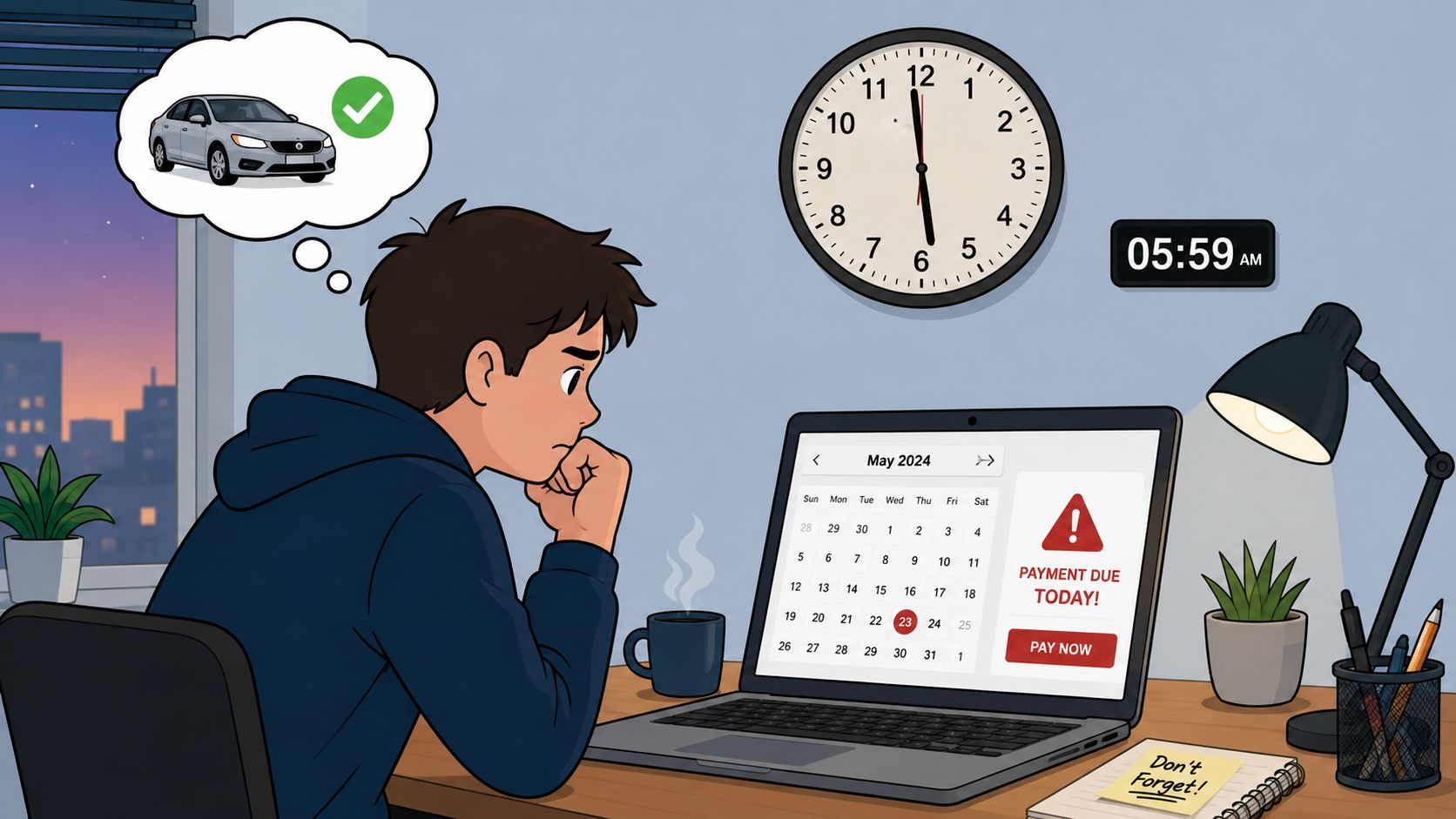
Alerts can save time by watching the DVSA booking system for you and sending a message when a better slot appears. Services built for that job, including how the alert process works, are meant to notify you so you can go back into GOV.UK and book or rebook the test yourself.
That approach helps when you are checking more than one centre or waiting for a better day to open up. It is a bit like waiting for a space in a busy car park, you do not reserve the bay by staring at it, you react when it becomes free. In practice, the best cancellations often appear when other learners are finishing lessons, changing plans, or deciding they are not ready yet, so checking at different times of day can be more useful than refreshing once in a panic.
Common Booking Mistakes to Avoid
The biggest mistake is treating the booking as the finish line. It isn't. A practical test is only one part of the job, and the DVSA pass rate for category B car tests in 2024-25 was about 48.7% across 1,836,558 tests, so a booked slot doesn't guarantee you're done DVSA-linked pass rate data.
That matters because if you fail, you're back in the same constrained system, waiting again and trying to find another appointment. Booking early helps, but preparation matters just as much. If you arrive tired, flustered, or underprepared, you may end up back at square one.
Mistakes that cost learners time
- Booking too fast: taking the first available date without checking whether your instructor can get you ready in time.
- Using up changes unnecessarily: burning through one of your two allowed changes because you booked in a hurry.
- Sharing details with the wrong site: giving your licence details to an unofficial booking service that adds fees or handles the booking in a way that no longer fits the 2026 rules.
- Assuming the slot solves everything: forgetting that you still need to arrive prepared, rested, and with the right documents.
A calm, realistic approach works better than panic booking. Confirm the date, keep your lesson plan focused, and be honest with your instructor about whether the slot gives you enough time to practise properly. A rushed test date can feel exciting on the day you book it, then turn into pressure later if you're not ready.
Where to Go From Here
If you are ready, open the official GOV.UK driving test service and keep your licence number and theory pass details beside you before you start. If you need a sooner date, set a reminder for Monday at 6am and check the system with a clear plan, not random refreshing.
If your test is still months away, keep looking for cancellations and expect the live system to move fast. That is how booking works in the UK, and once you understand it, you are much less likely to miss a good slot.
If you want help spotting earlier practical test appointments without spending all day refreshing the GOV.UK booking page, set up an alert with Driving Test Cancellations, keep your licence number and theory pass certificate to hand, and rebook directly on GOV.UK the moment an earlier slot lands in your messages.