You've passed the theory, your lessons are moving along, and now the practical test looks miles away. That's the point where a lot of learners start refreshing GOV.UK, hearing half-baked advice from friends, and wondering why the booking system feels like a moving target.
The short answer is that DVSA practical test booking is still under pressure, and the rules changed in ways many older guides don't mention. Since 12 May 2026, only the learner driver can book and manage their own car test, and the official waiting-time figures now need a bit of interpretation if you want to choose a centre sensibly. GOV.UK also confirms that most test centres do not run a waiting list or cancellation list, so you can't just sit in a queue and hope for the best. You have to use the booking system directly and, if you want an earlier slot, watch for one yourself through the official service or lawful notifications. The DVSA booking rules update makes that point clear.
That's why paying before you understand the rules can cost you time, not just money. If you book the wrong test type, pick a centre on distance alone, or rely on outdated cancellation advice, you can end up stuck with a date that doesn't suit your theory pass, your work rota, or your instructor's diary.
Table of Contents
- Introduction to DVSA Practical Test Booking in 2026
- How the DVSA Booking System Works
- Who Can Book and What You Need Ready
- Test Types and Fees You Will Pay on GOV.UK
- How to Book Change or Cancel Your Practical Test
- Waiting Times, Cancellations and Common Booking Mistakes
- Getting Your Test Sooner and What to Do Next
Introduction to DVSA Practical Test Booking in 2026
A learner can do everything right on lessons and still hit the same wall. The theory pass is in hand, the instructor is saying “you're nearly there”, and yet the nearest car practical test is months away.
That's not just frustrating, it changes the whole planning picture. If your theory test is already ticking down, or you've got work, college, or childcare to fit around a practical date, then the booking stage becomes part of the test itself.
The system is also harder to understand now because old advice is out of date. Since 12 May 2026, the learner must book and manage the test personally, and DVSA's official guidance says the only lawful route to an earlier appointment is for the learner to use the official service or swap directly with another learner. In the same period, DVSA's own figures showed waits still running well above the seven-week service target, which is why many learners are looking for cancellations rather than waiting passively. DVSA's business plan sets that target out plainly.
A good booking decision starts before payment. You need to know who can book, what details you need ready, which test category you want, and how the change and refund rules work if a better slot appears later.
Practical rule: don't treat the first available date as the only date. On the DVSA system, a little flexibility with centre choice can matter more than waiting for a perfect day to appear.
If you're comparing tools and workflows, it also helps to see how booking pages are structured in practice. A useful reference for site builders is create appointment forms, because it shows the kind of calendar logic people expect when they search for and select a slot. For a quick overview of how cancellation monitoring fits into the official process, this explanation of how it works is also worth a look.
How the DVSA Booking System Works
A practical test slot can vanish while you are reading the page, then appear again after another learner changes an appointment. The DVSA booking system works like a live diary, shaped by cancellations, moved appointments, and different demand at each test centre.
The official route is GOV.UK
All car practical tests in Great Britain are booked through the official GOV.UK service. DVSA's published figures show availability by country, region, and individual test-centre, so the national position may conceal useful local differences. One centre can have a much tighter diary than another on the same day.
DVSA's monthly release framework provides a benchmark for interpreting what you see. Its July 2026 measure reported that half of all learners taking a car test waited no more than 11.1 weeks. The broader measure, showing the point at which at least 10% of appointments remain available, reached 20.2 weeks in the same period. These figures came from the official GOV.UK dataset, updated on 9 September 2026 and covering August 2026. The official dataset and guidance explains the measures and their limits.
Treat the waiting-time figure as a guide to booking pressure, not a personal appointment promise. It describes availability across the published area, while your result depends on the centre, test type, and slots open when you search.
Why there usually isn't a waiting list
Most test centres do not keep a cancellation list. You cannot leave your name and expect DVSA to contact you when another learner gives up a slot. Learners who want an earlier test therefore need to check the live booking service themselves.
That changes the practical task. You are checking a changing diary rather than waiting for a turn in a fixed line. The official guidance can be read alongside this explanation of cancellation monitoring, which describes how a service can fit around the learner's own booking process.
Why constant checking matters
Availability may disappear between selecting a slot and confirming it. Repeated manual refreshing is tiring, and it may still miss an appointment that another learner claims first.
Calendar-based booking tools follow a similar pattern: they display available times and ask the user to choose promptly. That is why create appointment forms are a useful comparison for understanding calendar logic, although DVSA's rules are stricter than those of an ordinary appointment system. Any service you use must not replace the learner's own responsibility for booking or changing the test.
Who Can Book and What You Need Ready
The first mistake many learners make is assuming anyone can sort the test for them. That used to be common advice, but it's now outdated.
Who is allowed to book
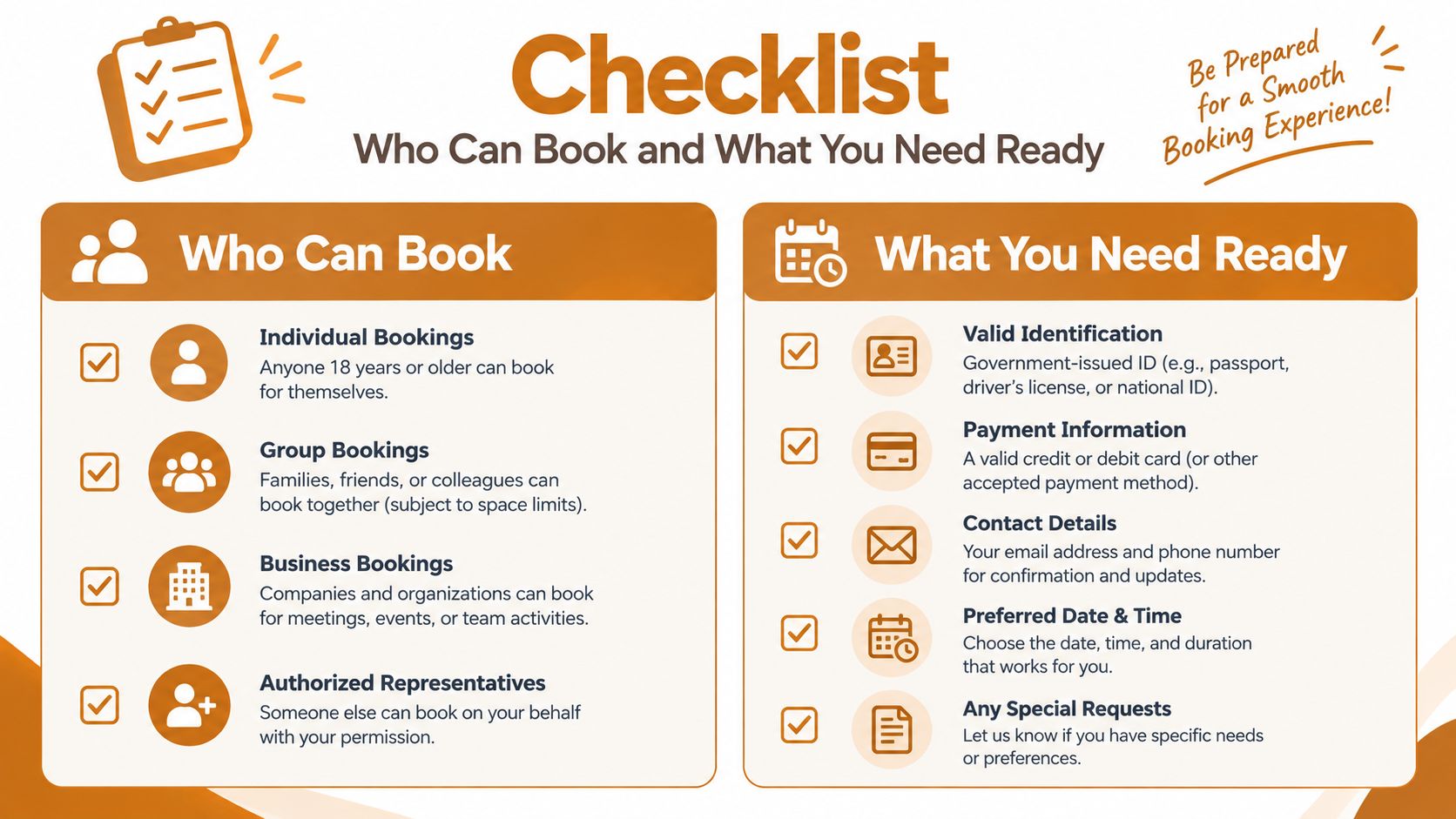
From 12 May 2026, only the learner driver can book, change, swap, or cancel a car practical test through GOV.UK. Parents, instructors, and family members can still help in practical ways, but they can't complete those actions on the learner's behalf. DVSA also says unofficial booking services and cancellation finder services can't lawfully operate in that role.
If you can't use the online GOV.UK service, DVSA says you can still book by calling its customer service centre, but you must confirm that you're the learner taking the test and agree to the new terms before the booking is completed. That matters because some older articles still suggest an instructor can “sort it out” in the background. They can't, not as the person making the booking.
What to have ready before you pay
You'll need the practical basics sorted before you start:
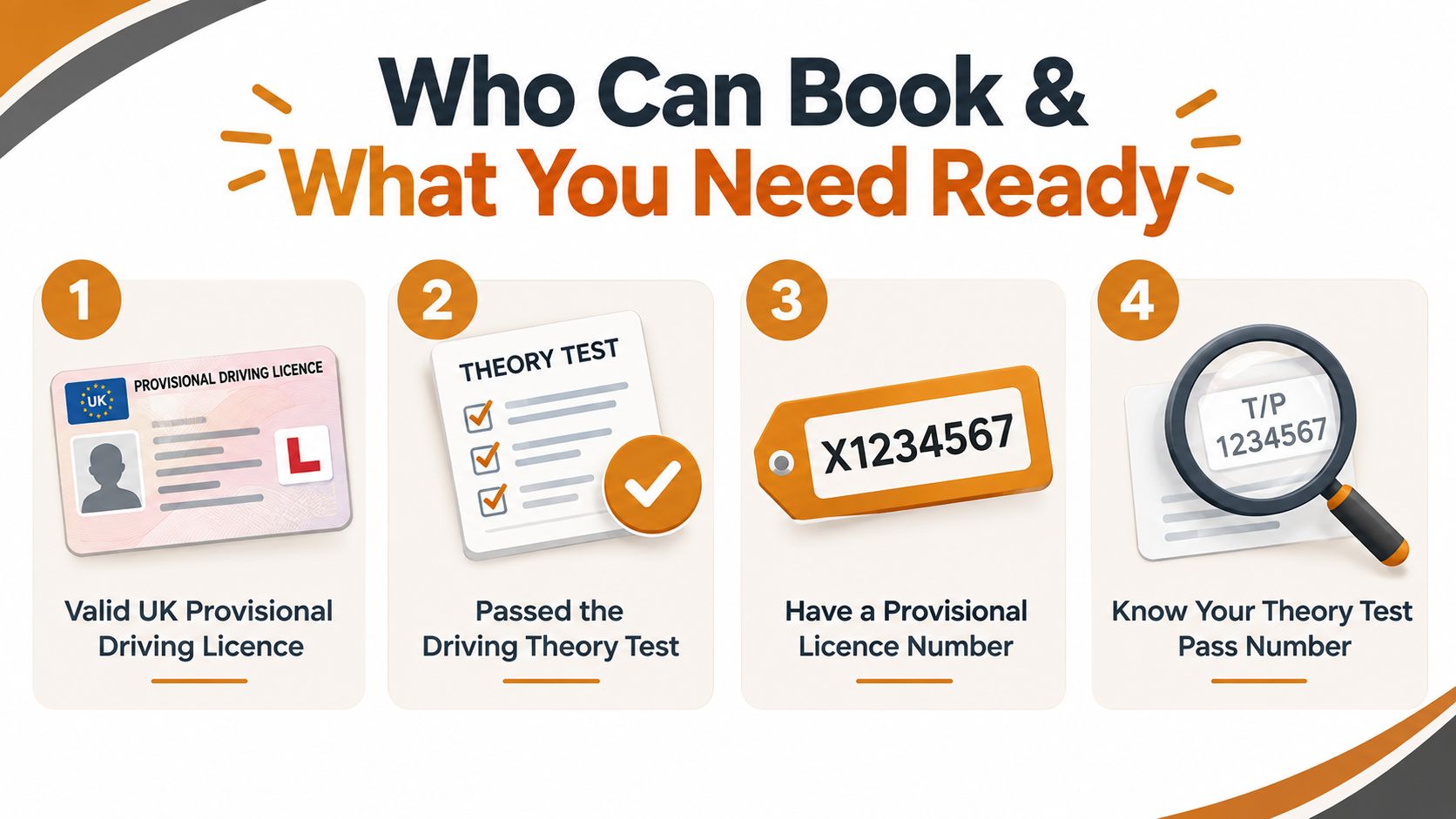
- Valid provisional licence, because the booking is tied to your learner status.
- Passed theory test, since you can't take the practical test without it.
- Licence number, so you can complete the booking details accurately.
- Theory test pass number, in case the system asks you to confirm your pass details.
- Email address, because DVSA says it's required for booking and updates.
- Knowledge of your chosen centre, including a sensible back-up if your first choice is full.
The eyesight part matters too. You need to meet the legal eyesight standard for driving, and if that's uncertain, it's better to deal with it before booking than after. A failed booking because the details don't match, or because the learner hasn't prepared the information properly, only adds delay.
Useful habit: keep your licence details, theory pass details, and chosen test centres in one note before you log in. That saves time when a slot appears and you need to move fast.
A sensible way to get help
Family, instructors, and friends can still help by checking times with you, reminding you of deadlines, or sitting with you while you make the booking yourself. They just can't take over the action. That distinction is now central to the whole process, and it's where a lot of confusion still starts.
Test Types and Fees You Will Pay on GOV.UK
Picking the right test category matters as much as finding the date. A booking in the wrong category can waste time and, in the worst case, send you to the wrong payment path altogether.
The fee depends on the vehicle type and, for some tests, the time of day. GOV.UK also has different booking pages for cars, motorcycles, lorries, and buses, plus extended tests where those apply. The practical point is simple, don't assume every test works the same way.
| DVSA Practical Test Types and Typical Booking Fees | When It Applies | Fee Note |
|---|---|---|
| Car practical test | Standard learner car test | Fee is taken through GOV.UK at booking |
| Motorcycle practical test | Learners and riders booking a bike test | Fee depends on the test category selected |
| Lorry practical test | HGV candidates taking a practical test | Fee is higher than a car test and varies by category |
| Bus practical test | Bus and coach candidates booking via GOV.UK | Fee depends on the test type and timing |
| Evening or weekend slot | Where DVSA offers a later or out-of-hours appointment | Some categories have a different fee for these slots |
| Extended test | Where an extended practical test is required | Use the booking page for the relevant licence category |
The key thing to understand is that the fee covers the appointment you choose at the time of booking. If you cancel with enough notice, DVSA can refund it under its rules, but short-notice changes are treated differently. GOV.UK's change guidance sets a 10 full working days notice rule for a full refund on a car test, while other tests generally need at least 3 full working days. The change-driving-test guidance sets that out clearly.
If you're unsure which test page to use, stop and check before paying. A wrong-category booking can be awkward to unwind, especially if your theory pass is close to expiring or your diary only leaves a small window for retakes.
How to Book Change or Cancel Your Practical Test
The official flow is straightforward once you know it, but the order matters. Searching first and paying second is the safe way round.
Booking the slot
Start by searching GOV.UK for your preferred test centre and date range. The system shows live availability, so the useful habit is to compare a couple of centres rather than locking yourself to one postcode.
Once you spot a suitable slot, select the date and time, check the location, and complete the booking yourself as the learner. DVSA says only the learner can make the action, even if someone else is helping in the room or on the phone. That rule is why a notification-only service can be useful, because it can alert you to a new slot without trying to act on your behalf.
Changing or cancelling later
If you need to move the test, the current rule is that a car test can be changed up to two times. After that, you must cancel and rebook. A DVSA cancellation or reschedule does not count against the two-change limit, which is important if the agency changes your appointment for operational reasons.
The notice periods are tight, so short-notice rebooking often means cancelling and starting again rather than trying to make a free amendment. For a car test, a full refund needs 10 full working days' notice. For other tests, GOV.UK sets a 3 full working days rule. DVSA's cancellation policy is a useful companion guide if you want the practical version in one place.
The safest workflow
- Check availability first, because the best slot may be in a nearby centre rather than your first choice.
- Book directly as the learner, since the system now requires it.
- Keep your confirmation details, so you can act quickly if a better slot appears.
- Use alerts, not automation, because the lawful action has to stay with the learner.
Waiting Times, Cancellations and Common Booking Mistakes
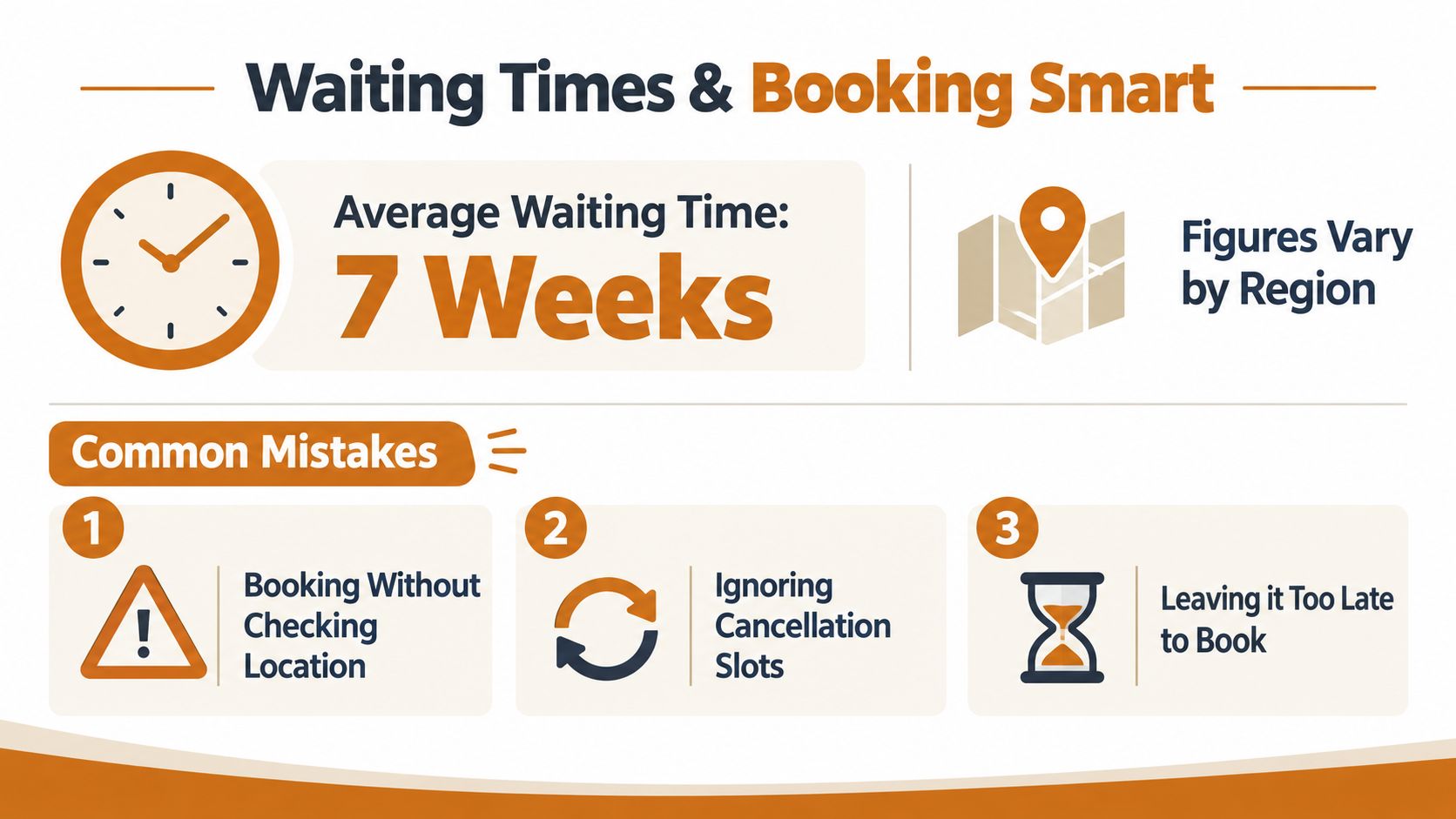
The headline waiting figure can be misleading if you don't know what it measures. DVSA's own blog says the commonly quoted wait is the number of weeks until at least 10% of weekly appointments remain available at a centre, not a simple average of everyone's wait. That explanation matters because it changes how you compare centres.
What the figures are really saying
The official target in DVSA's 2025 to 2026 business plan is 7 weeks or fewer for a car practical test waiting time, but the agency said it could not yet give a confident date for when that target would return. By July 2026, the official median wait in Great Britain was 11.1 weeks, while Wales was at 7.6 weeks and Scotland was much higher at 15.6 weeks. In September 2025, the National Audit Office reported an average wait of 22 weeks in Great Britain, which shows the backlog has been deep and persistent. The NAO summary and DVSA's business plan both point to that pressure.
The danger for learners is assuming every centre is basically the same. They're not. A centre that looks closer on the map may be much harder to book than one slightly further out.
Why cancellations matter so much
Because the official diary moves all the time, cancellations are where the practical opportunity sits. Manually refreshing can work, but it's inefficient and easy to miss a short-lived slot. That's why many learners use alert-based systems, which watch for freed appointments and tell the learner to rebook directly.
One option in that space is Driving Test Cancellations, which monitors DVSA practical test availability and sends alerts when earlier slots appear. That kind of service sits on the notification side of the process, not the booking side, which matches the current learner-only rule.
Common mistakes that cost people time
- Picking a centre by distance alone, then discovering the diary is much worse than a slightly farther option.
- Using old advice about third-party booking, which no longer fits the 2026 rules.
- Misreading notice periods, then losing the chance of a full refund or a free change.
- Waiting for the “perfect” slot, which often means missing a decent one that appears first.
If you want a broader view of how these waiting patterns shift, this waiting-times guide helps explain why the same search strategy won't work equally well at every centre.
Getting Your Test Sooner and What to Do Next
The lawful route to an earlier test is still the same in principle, keep checking the official booking system and move quickly when a better slot appears. The difference now is that the learner has to do the actual booking, change, cancellation, or swap, so any shortcut that tries to do that job for you is out of step with DVSA's rules.
A sensible plan is to compare a few centres using the official waiting-time tables, choose the one that gives you the best balance of travel and availability, and keep your details ready so you can rebook without hesitation. If your first centre is buried under a long diary, widening the search area can make more sense than waiting for one postcode to clear.
The notice rules also matter. If you spot a better slot, check the full working days left before you act, because that's what decides whether you're dealing with a free change, a cancellation, or a fresh booking. And if your lesson plan is still flexible, talk to your instructor about keeping the final weeks sharp enough to take advantage of an earlier date if one comes up.
For final checks, stick to GOV.UK and DVSA guidance rather than recycled forum advice. The rules are moving, the booking pressures are real, and the details now matter more than ever.
If you want a clearer way to watch for earlier practical test dates without breaking the DVSA rules, visit Driving Test Cancellations and check how its alert-based monitoring fits with the current learner-only booking process. It's a practical way to stay on top of cancellations while still rebooking yourself through the official system.